PROSTHETIC MAKEUP
WARNING: GRAPHIC! FAKE BLOOD FAKE WOUNDS FAKE INJURY
How did I get here?!
Keep scrolling to find out…
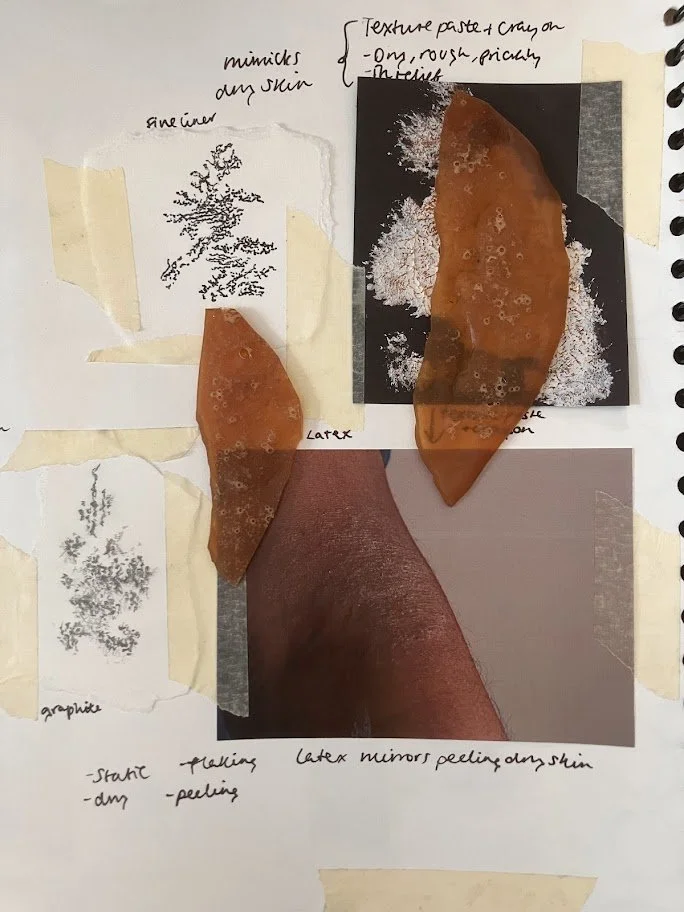
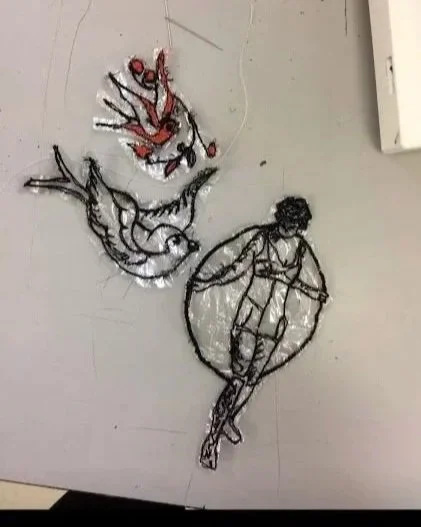
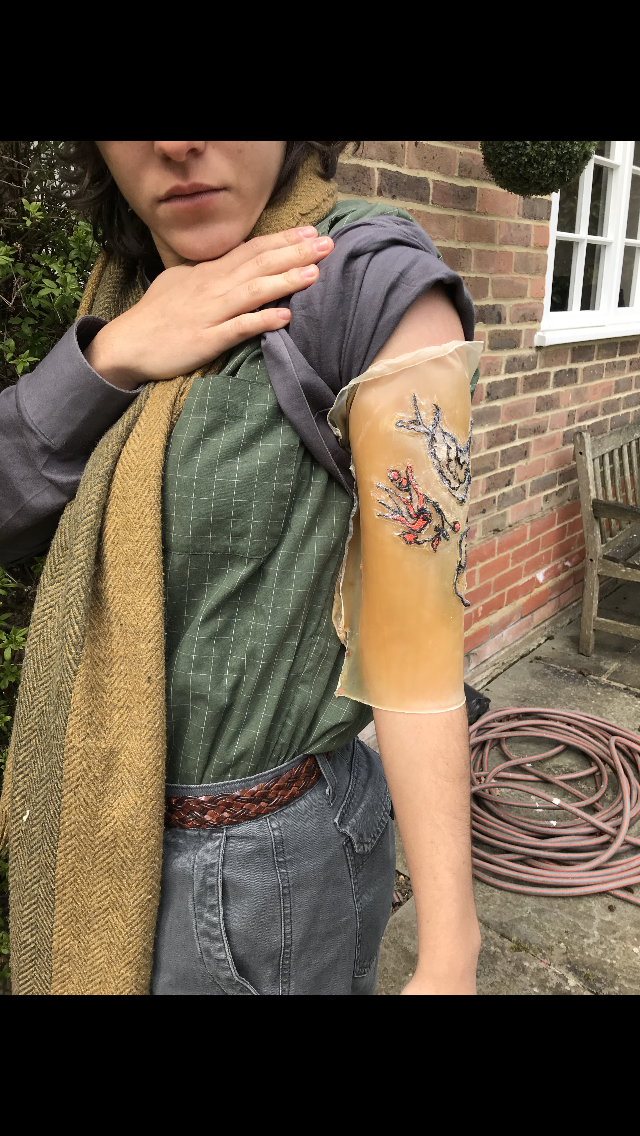
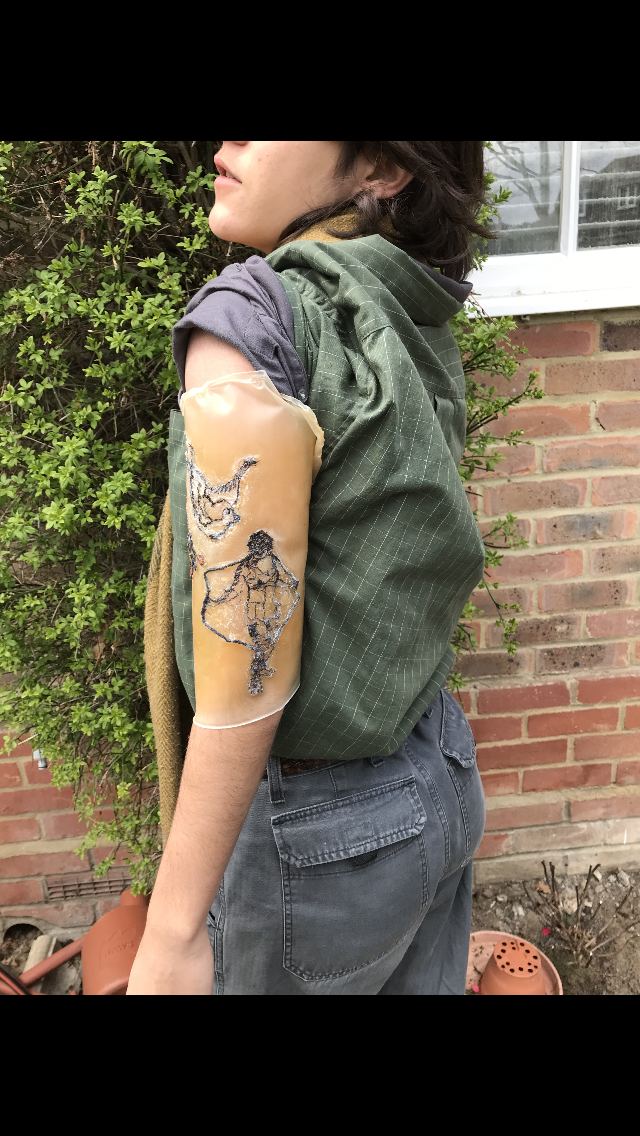
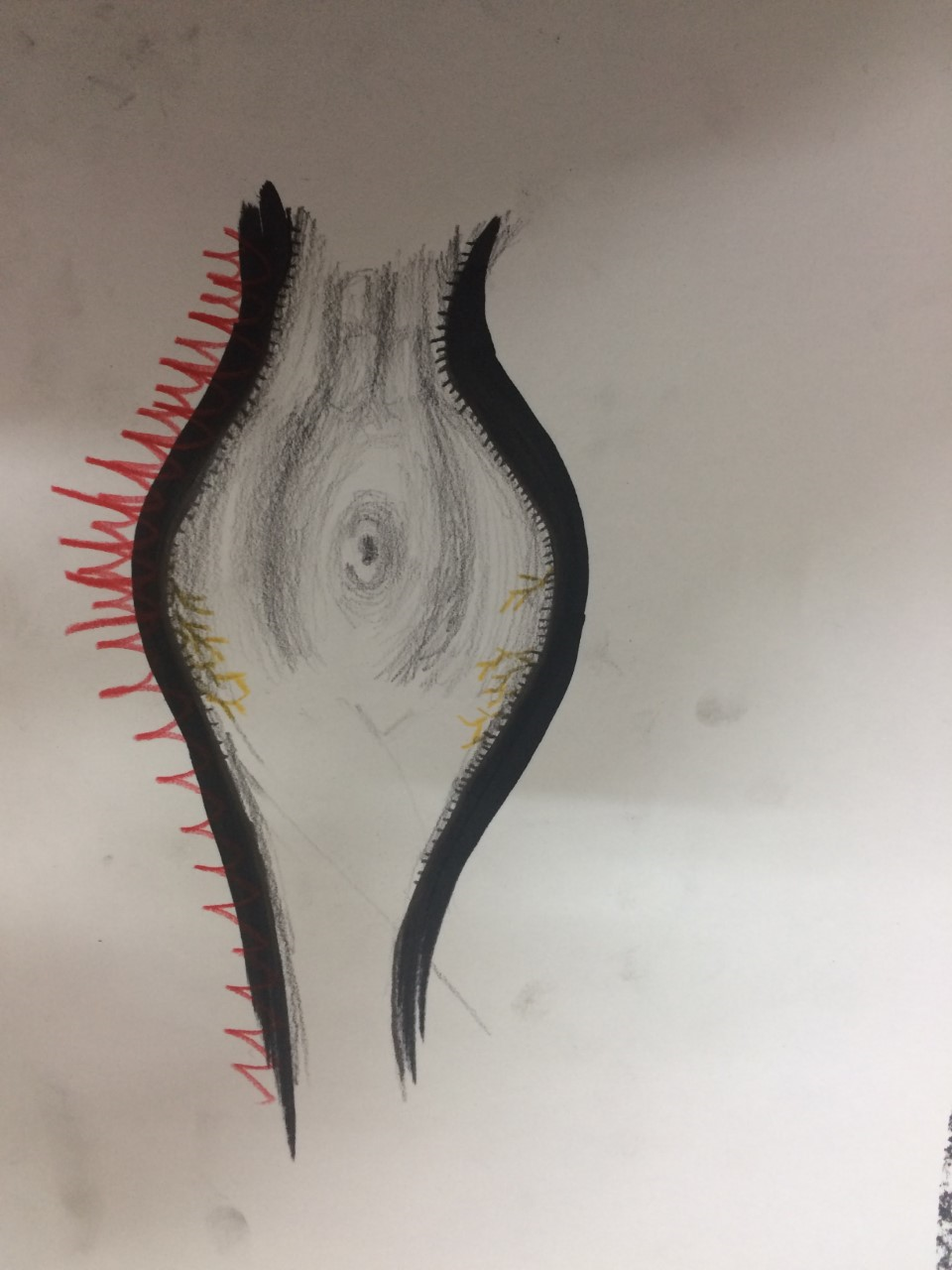
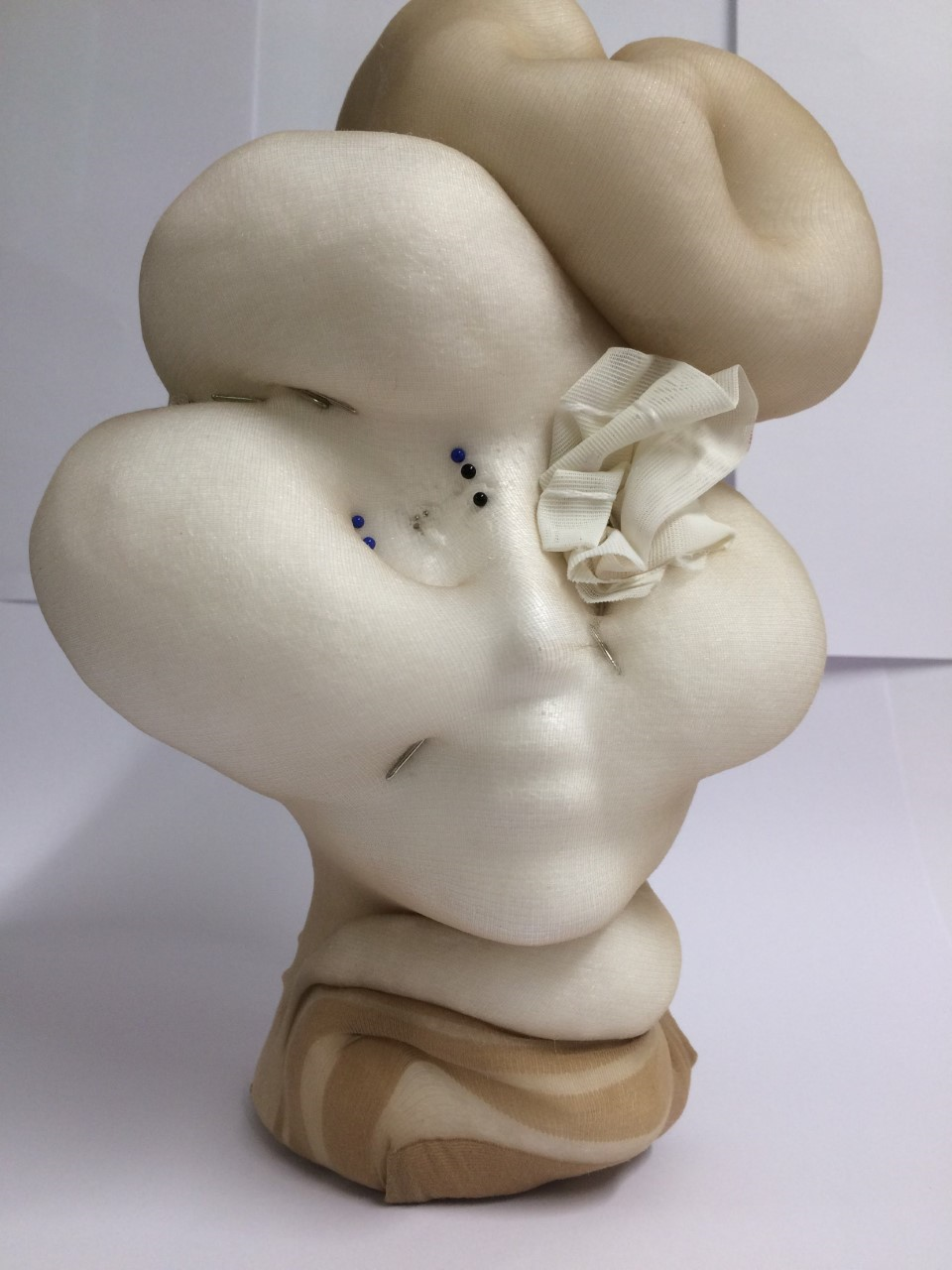
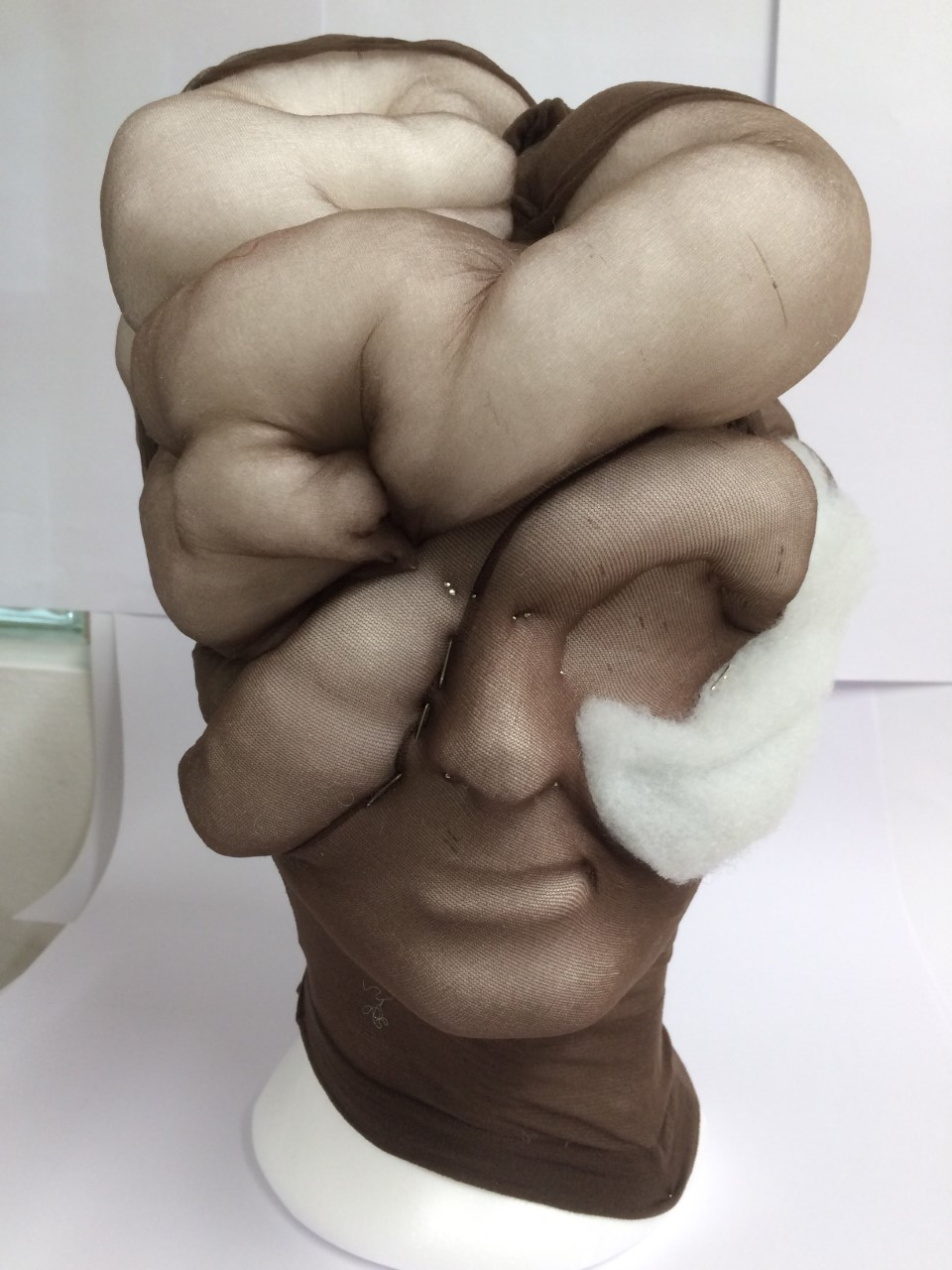
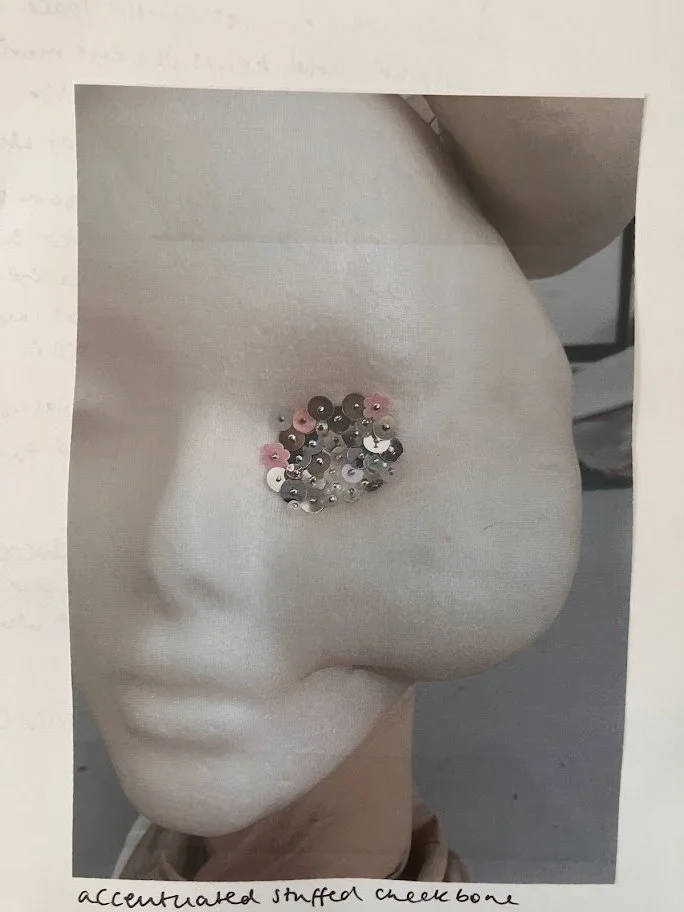
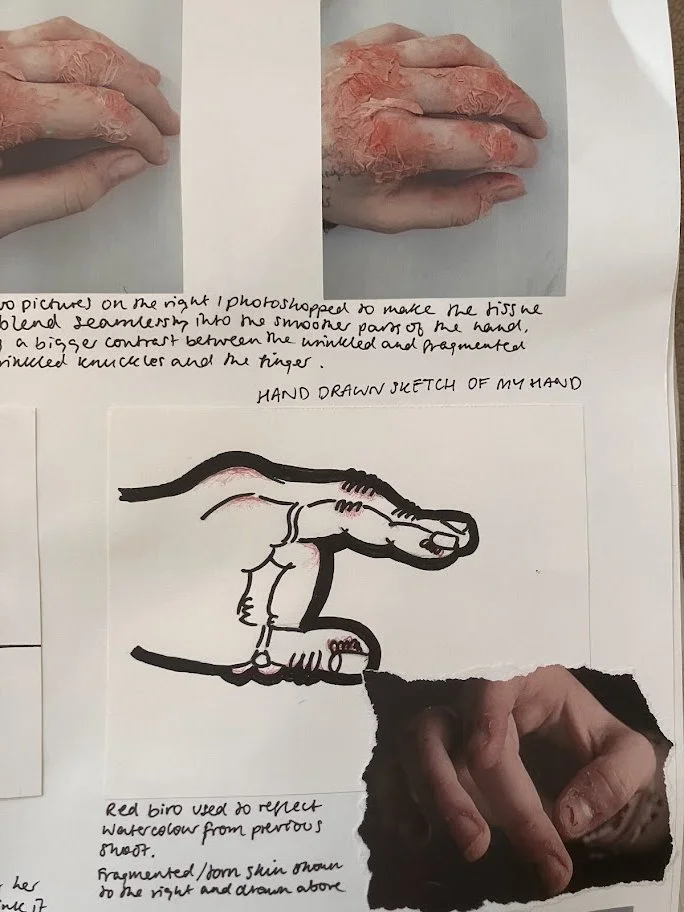
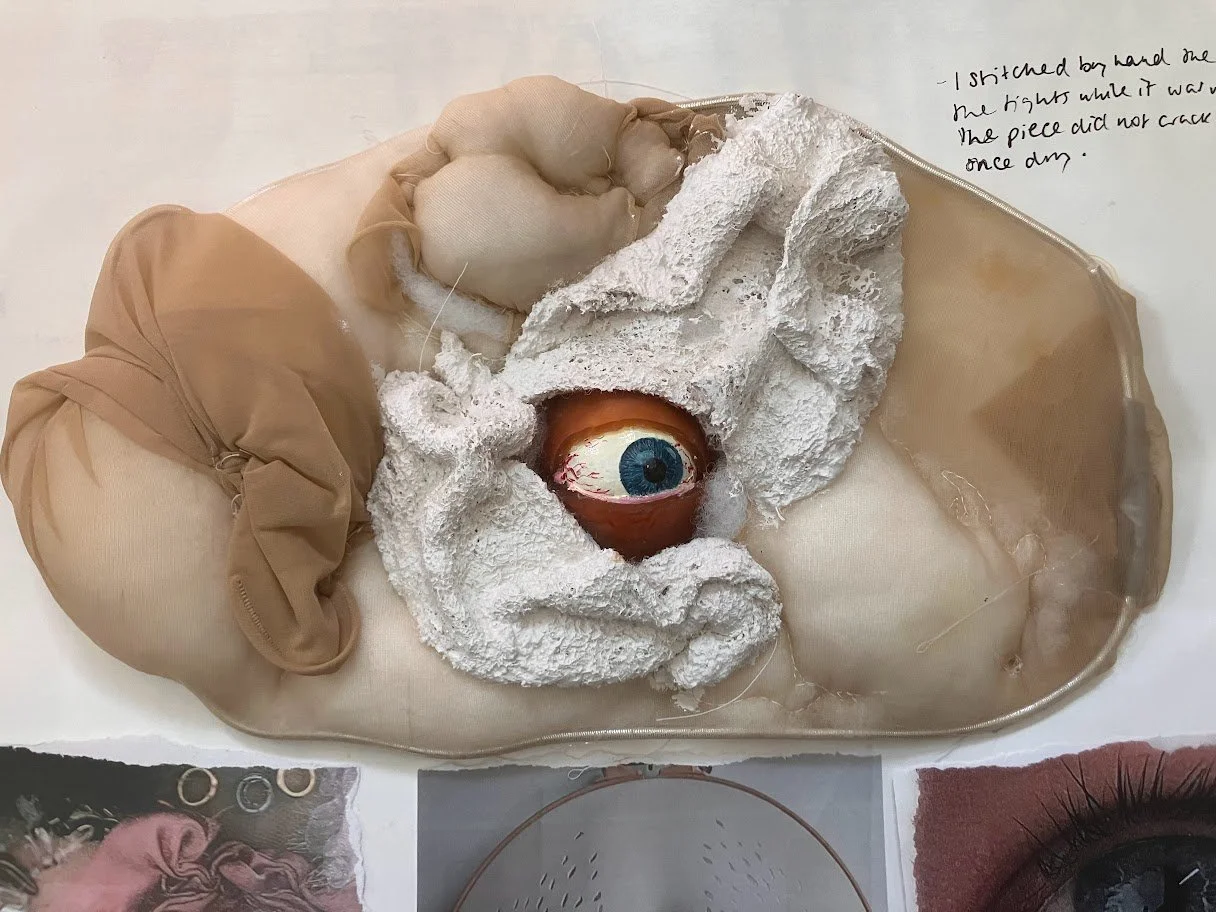
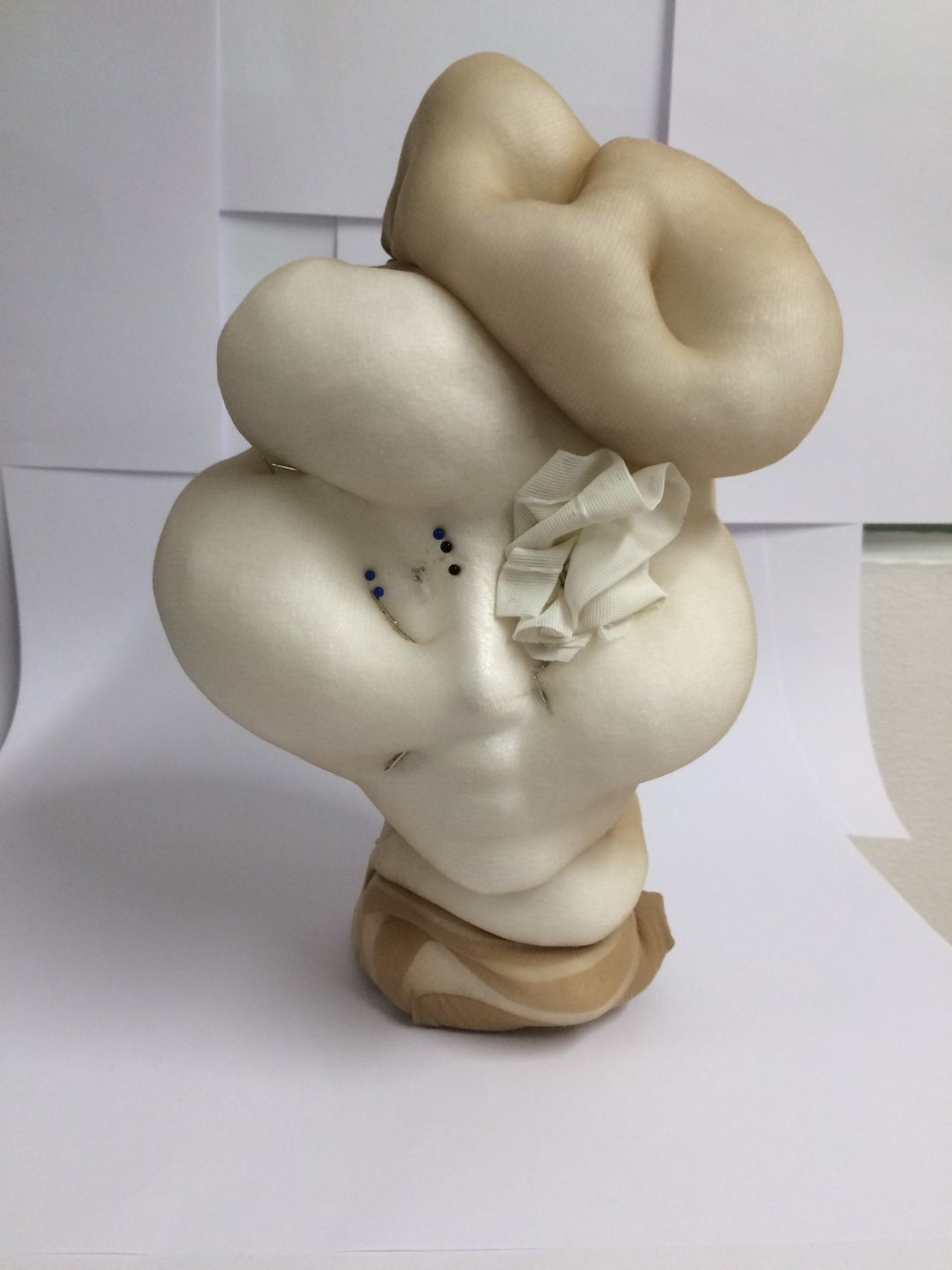
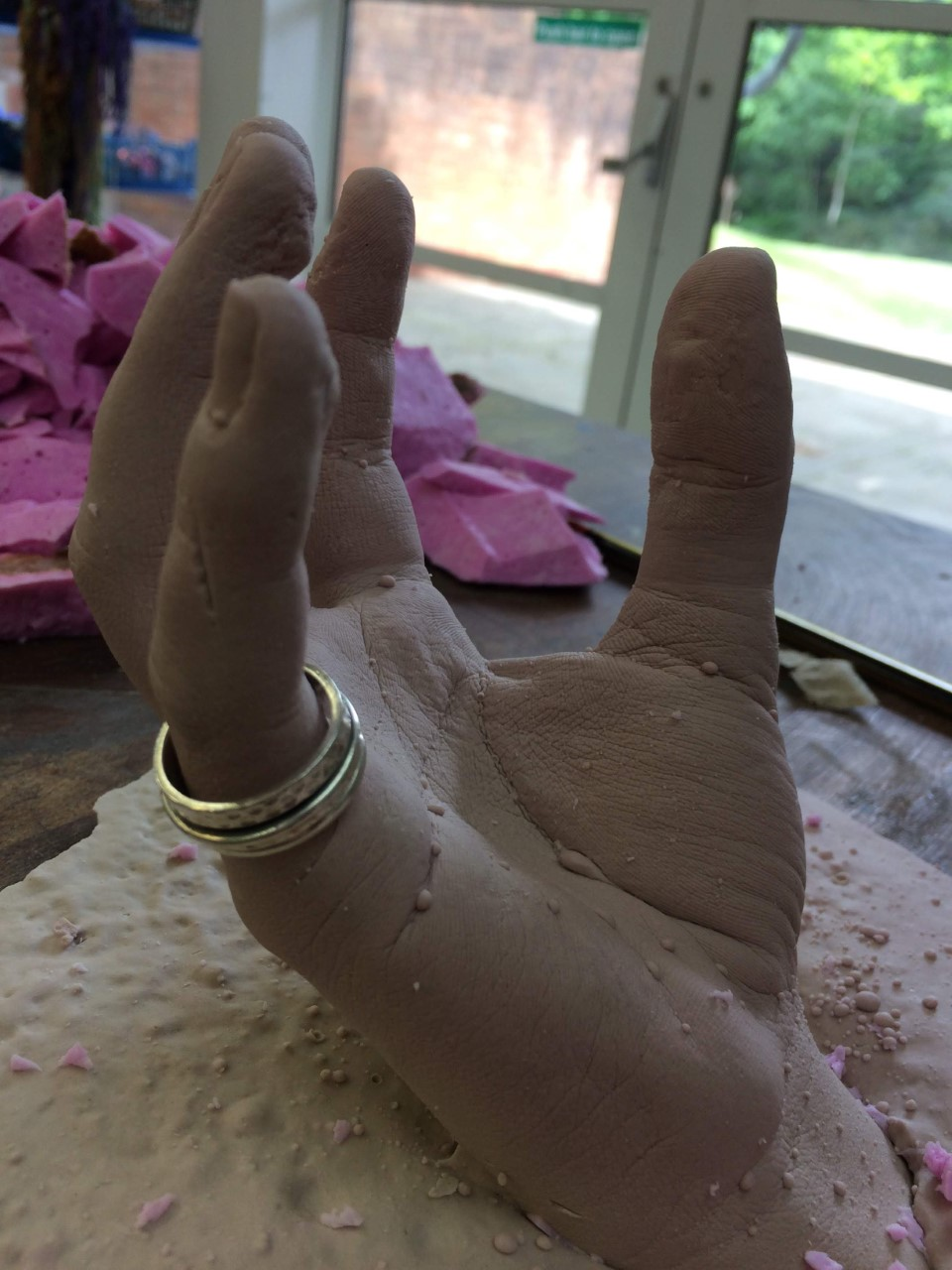
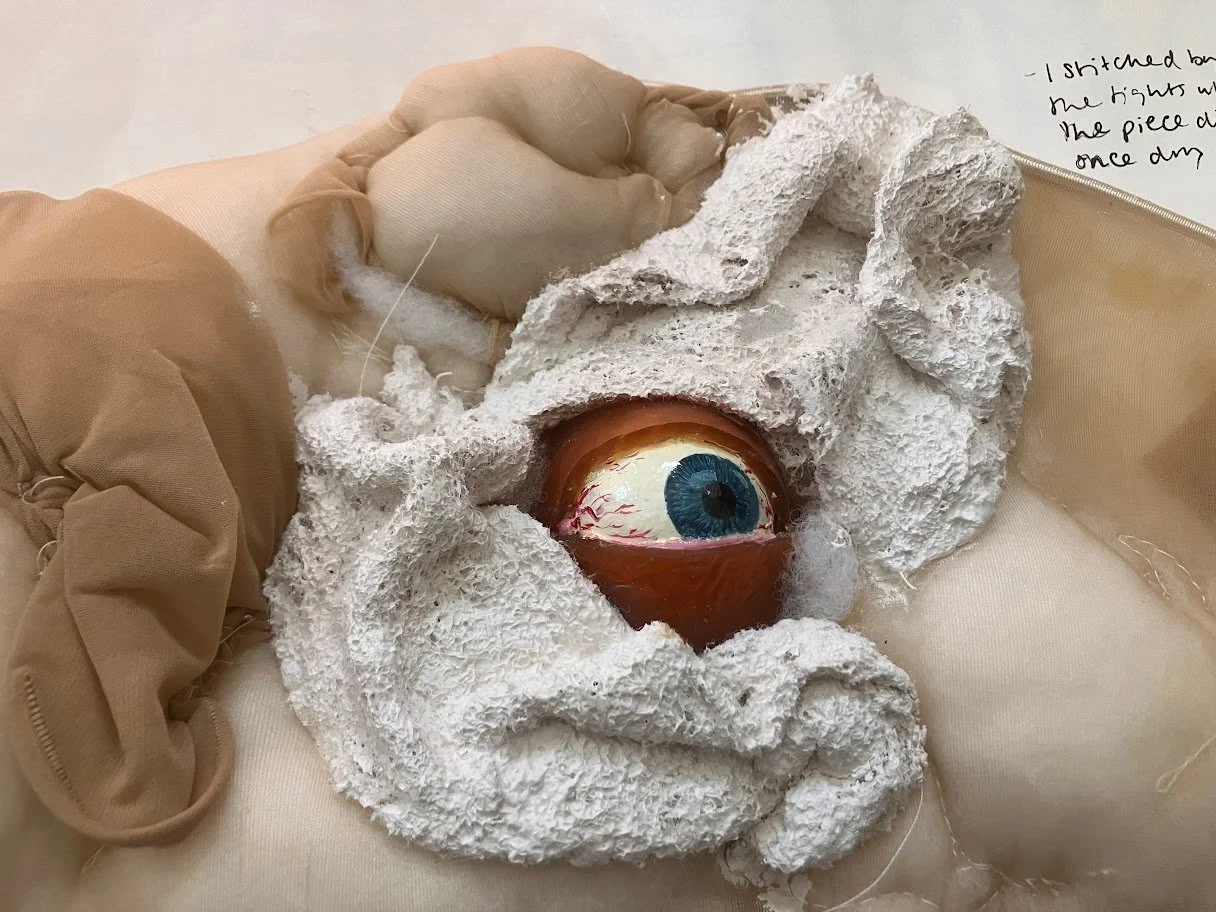
See the bottom of this page for the fine art and textile work, studying skin texture and the human form, which sparked my interest in prosthetic makeup.
Reference pictures were used for every look, but have largely not been included on this site.
My Extended Project Qualification explored the history and development of the prosthetic makeup and animatronic industry with a portfolio of looks.
I received full marks for this qualification. I think is due to not only the extent and quality of my research and work, but my reflections on what didn’t work and why.
I love to learn, I am ambitious and reflective, and would cherish the opportunity to develop my skillset on your Animation Trainee Finder scheme.
On this page you will see liquid latex ‘burn’ direct application, liquid latex and food-grade gelatine cast prosthetics from a handmade plasticene and plaster-of-paris mould, and directly applied scar wax prosthetics.
My research included watching a range of films tracking the development of special effects makeup, reading books and watching videos on at-home prosthetics, and reading medical journals to learn about the layers of epidermis, their colour, and texture.
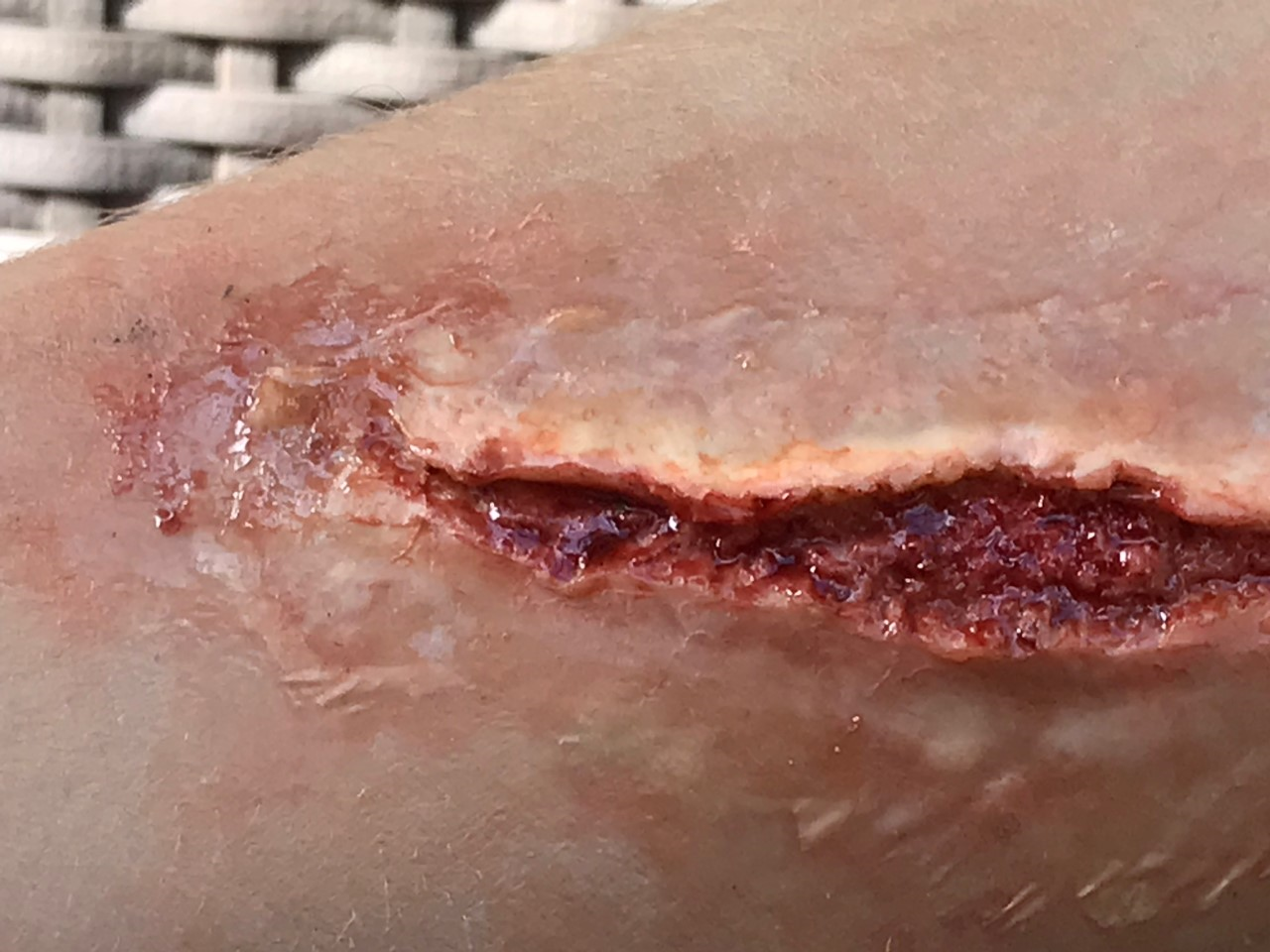
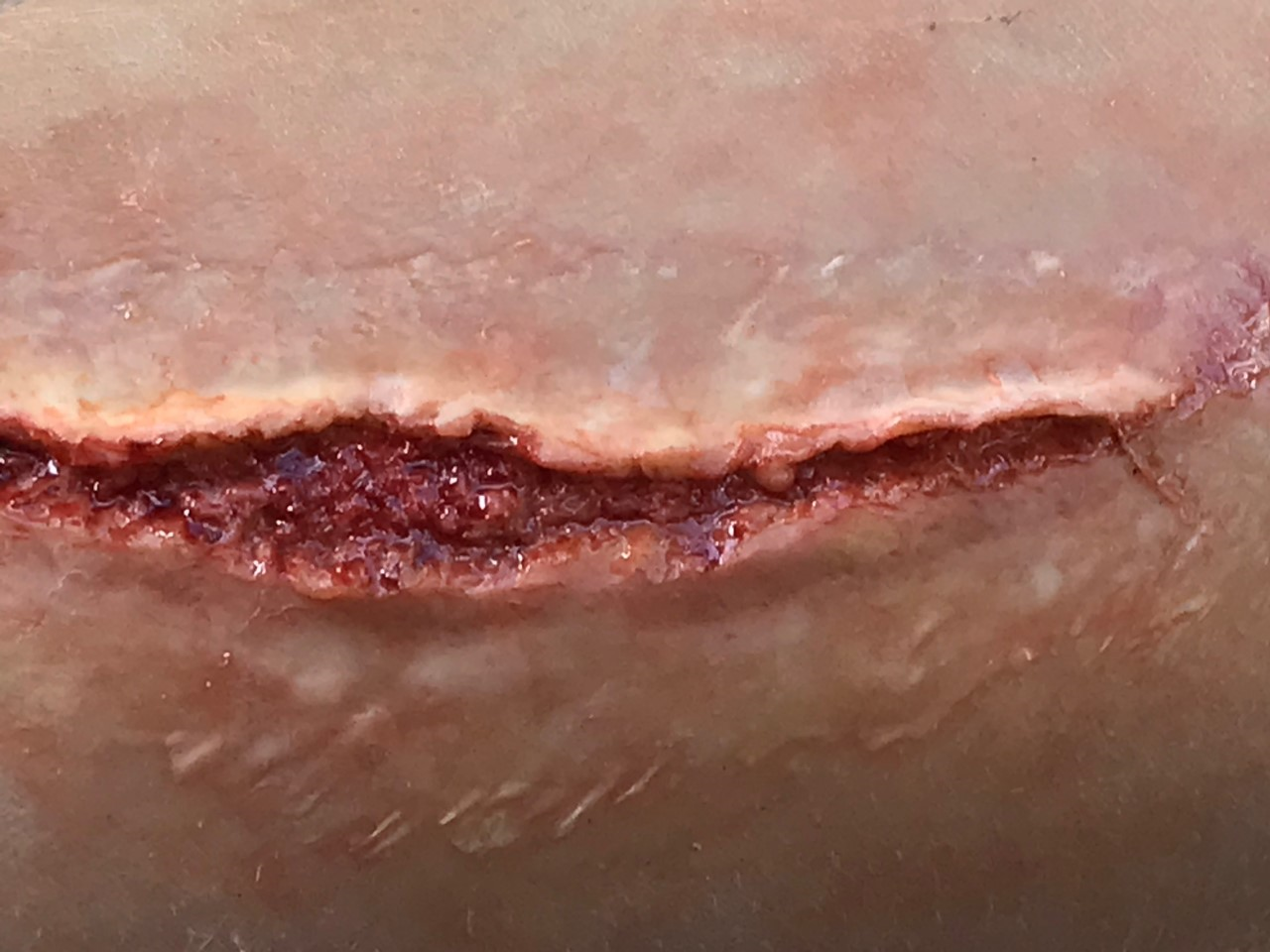
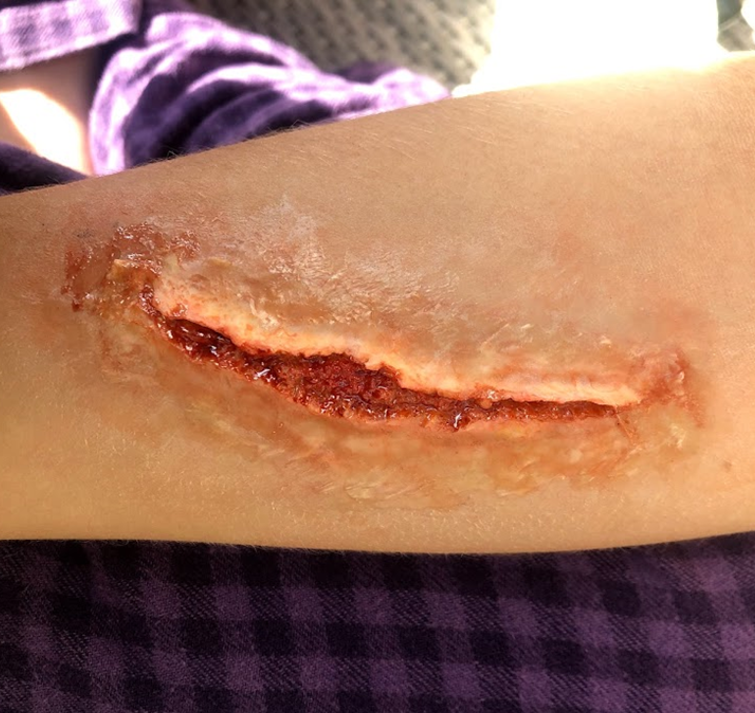
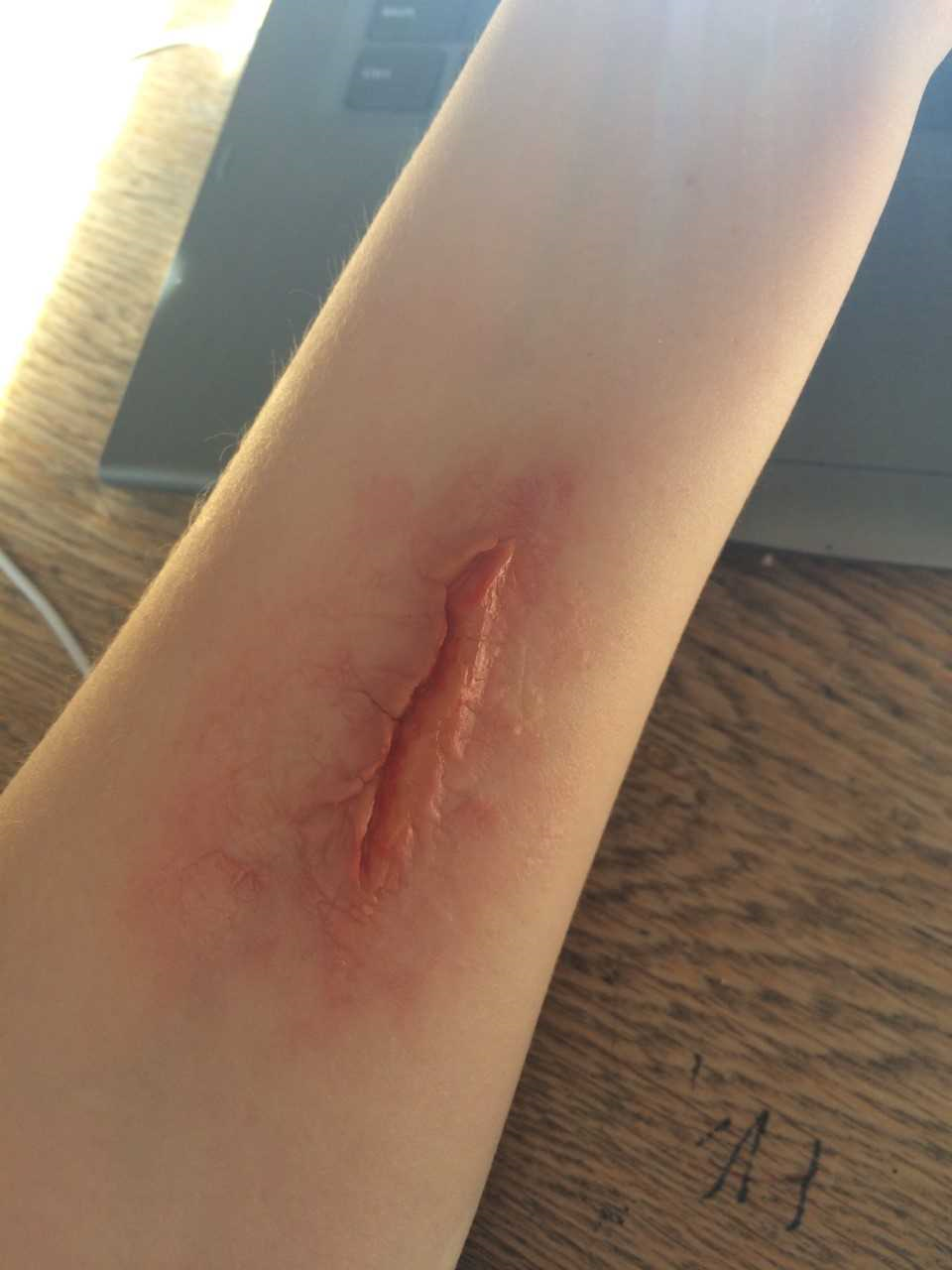
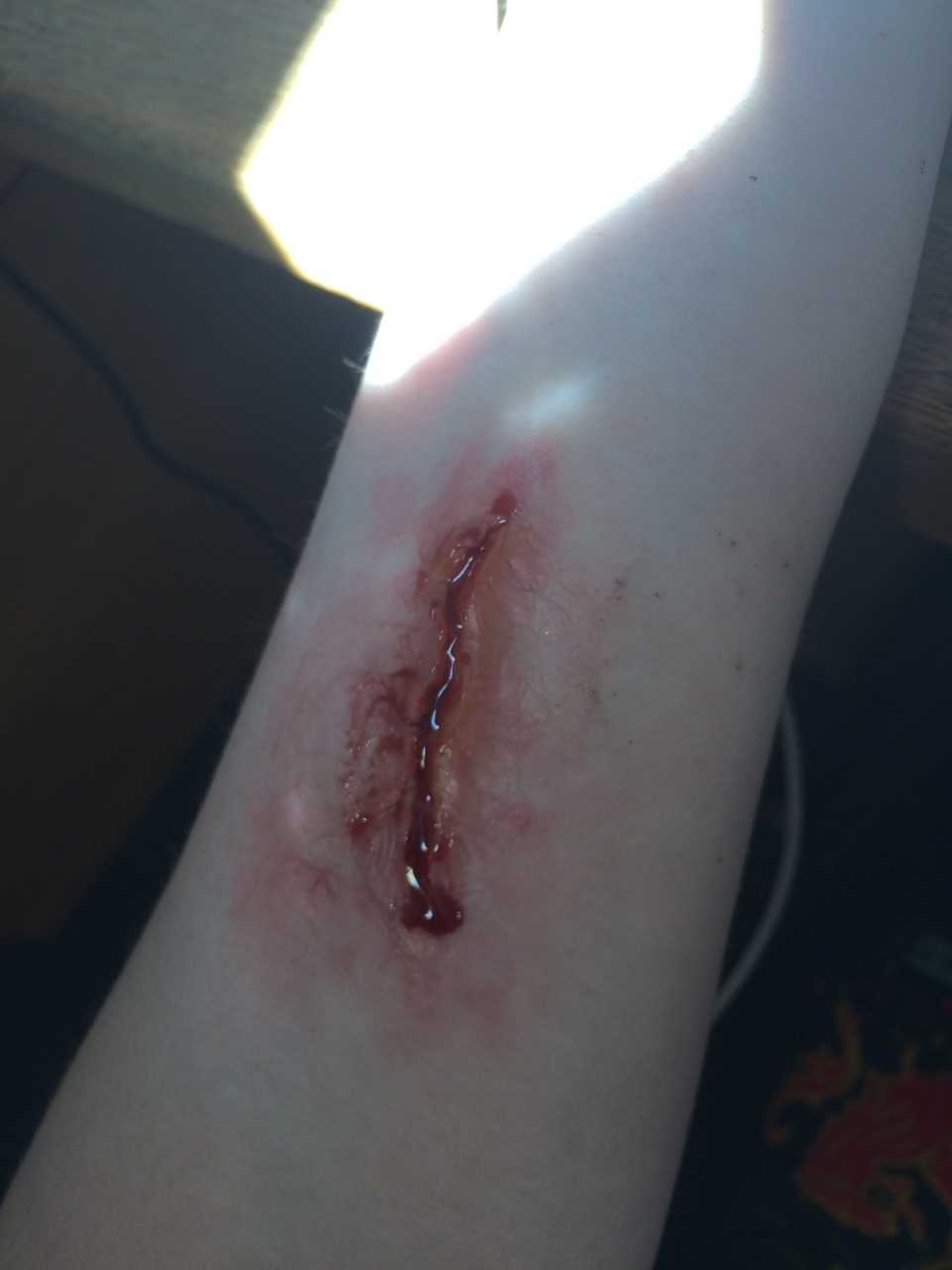
Liquid latex cast ‘cut’ prosthetic
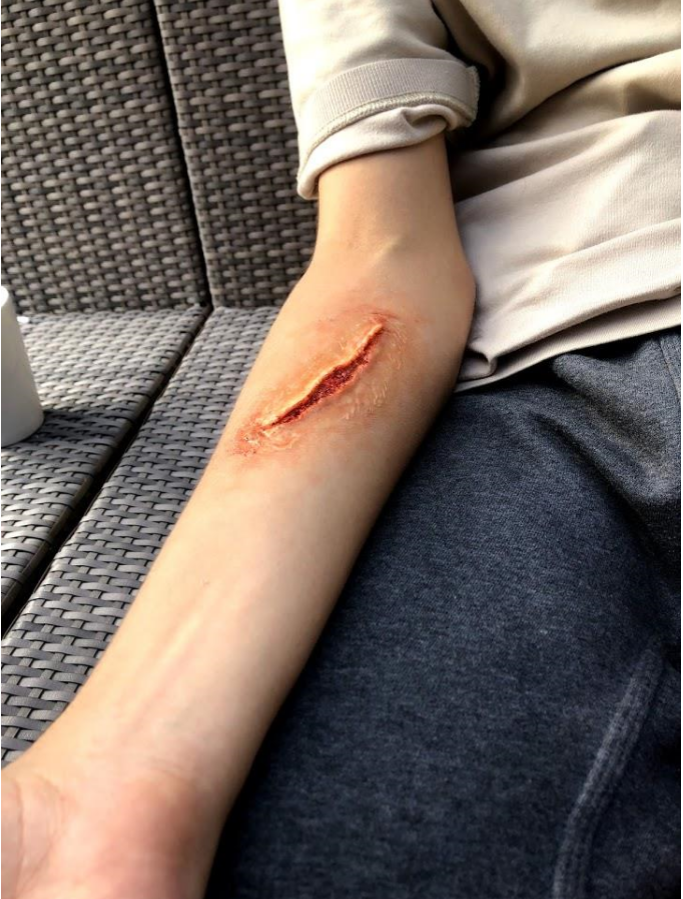
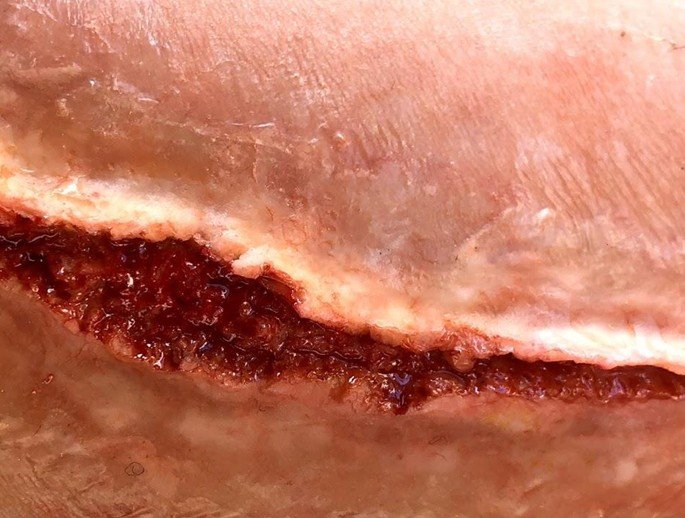
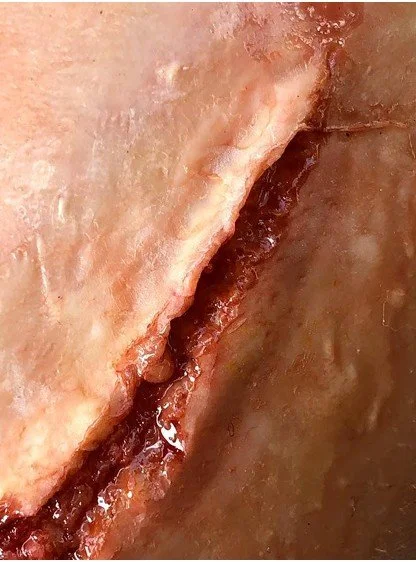
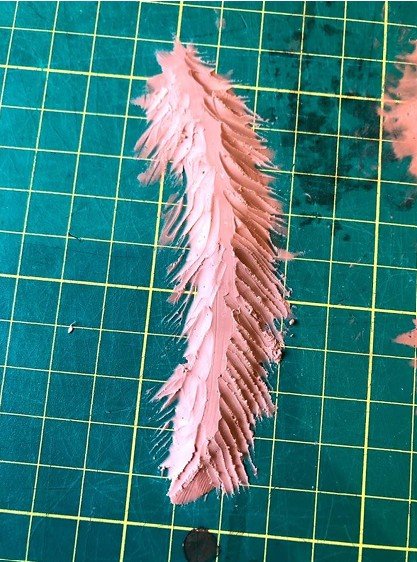
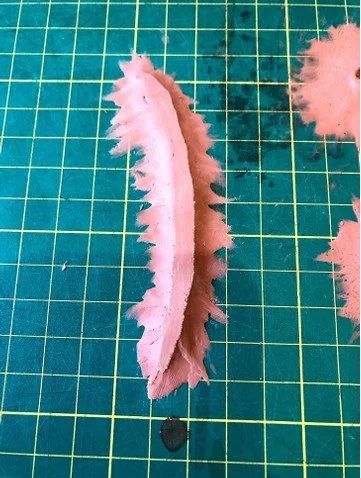
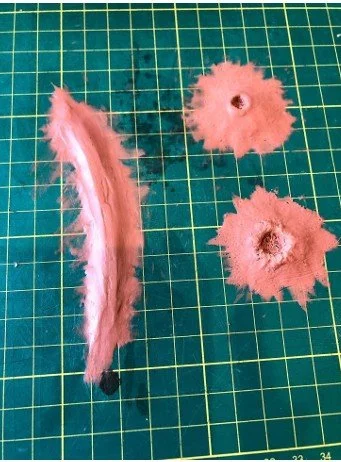
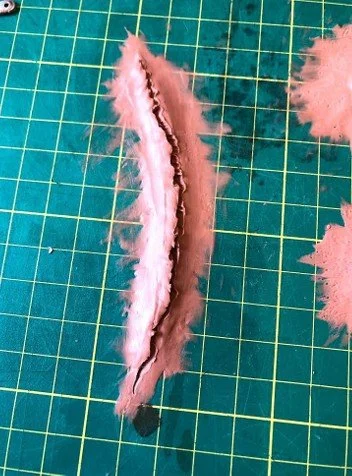
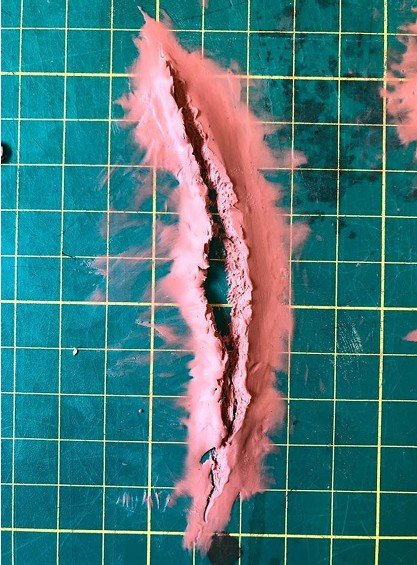
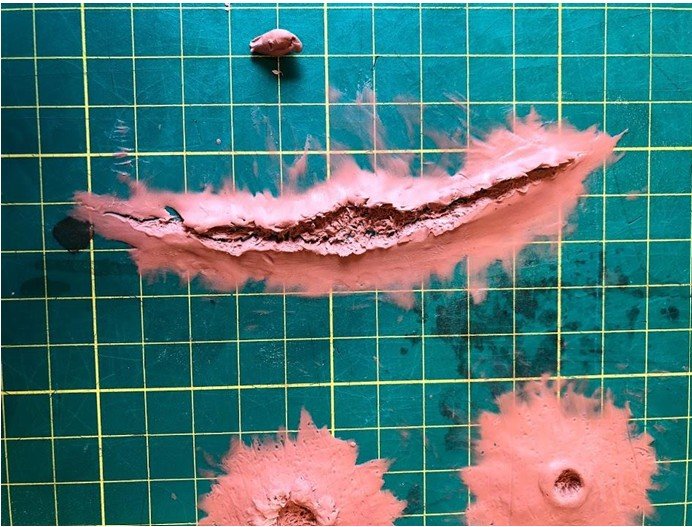
See carousel below for the process of making the transfer, the mould, casting in latex, the application process, and how I built colour and texture.
This was one of the most successful techniques. Creating this prosthetic taught me that success is determined in the initial transfer and casting process. The more texture and detail developed in these initial stage to mirror the exposed epidermis and fat layers, the more effective the colour and gloss will be developed later.
The prosthetic edges lay flush to the skin, and the edges were successfully feathered in the moulding process, so were easy to blend.
-
![]()
Crafting the transfer...
-
![]()
-
![]()
-
![]()
-
![]()
-
![]()
-
![]()
Casting a plaster mould
-
![]()
-
![]()
-
![]()
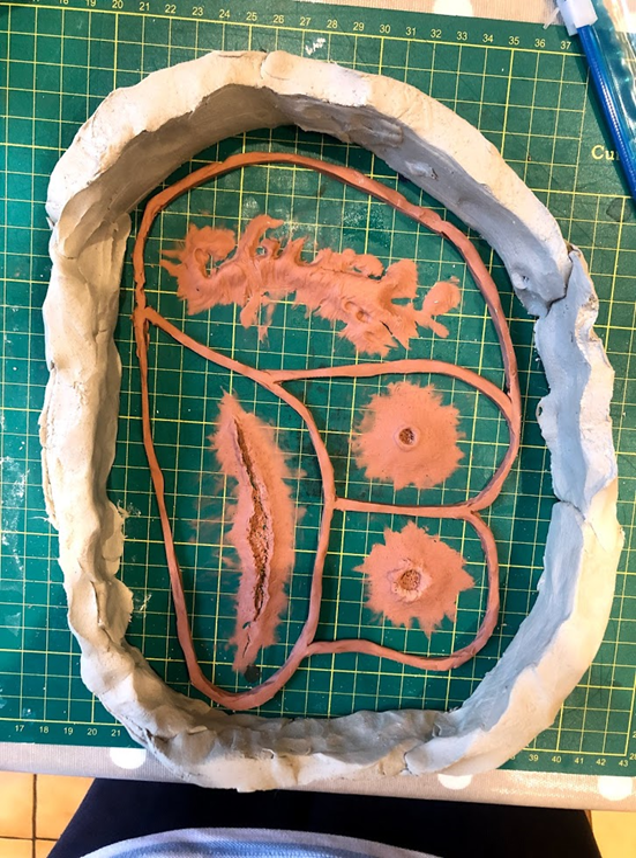
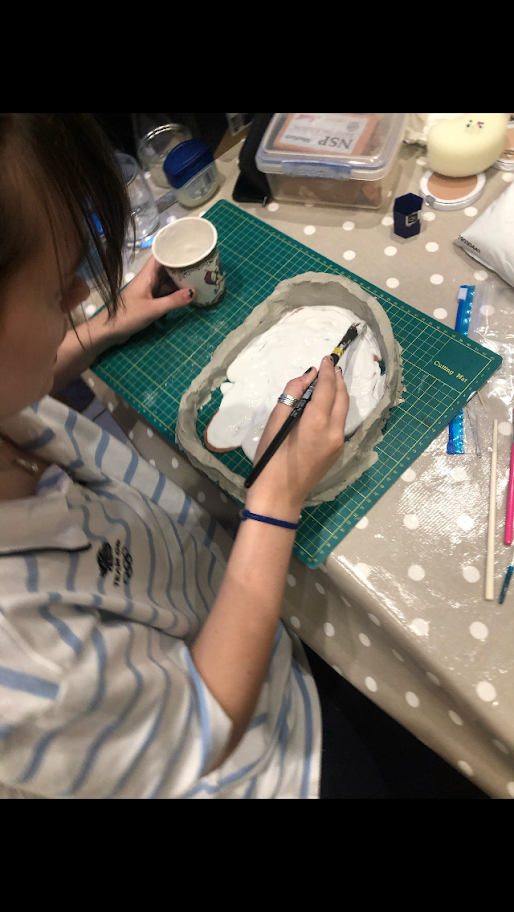
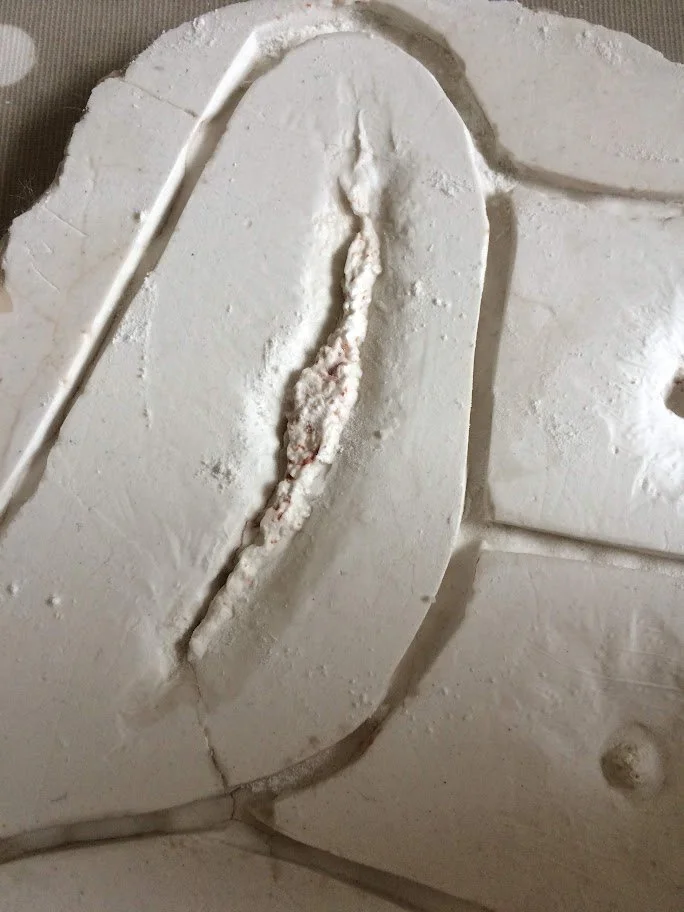
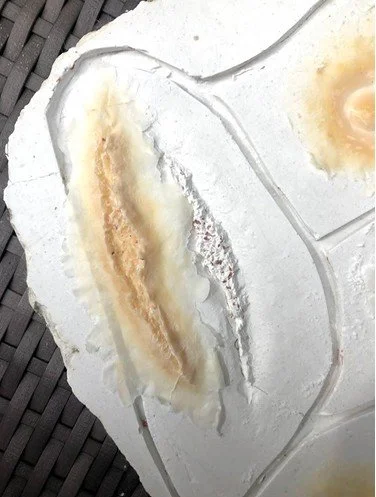
Application process
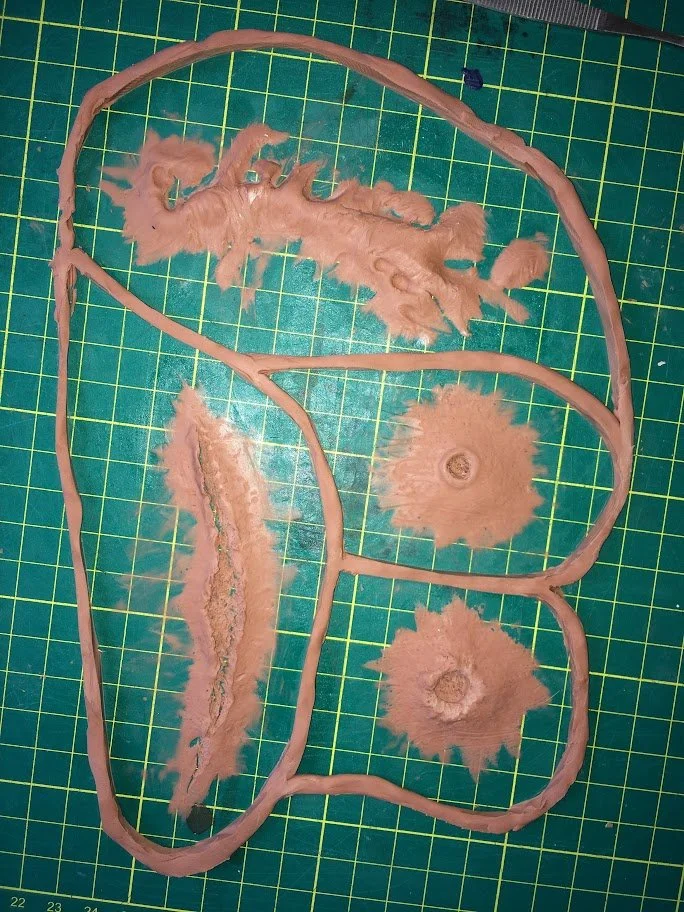
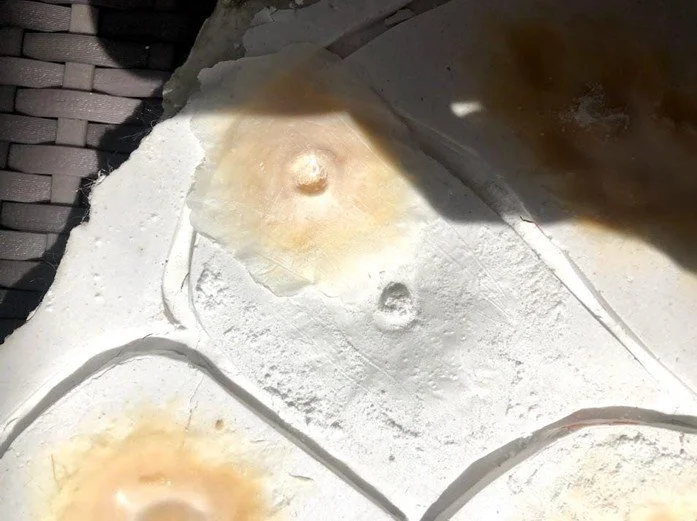
Having used plasticine and toothpicks to slowly craft shape and texture, keeping in mind what I’d learnt about epidermal layers, I created a clay wall and poured plaster-of-paris onto my mould.
Once set I sprayed a thin layer of Crystal Clear Enamel Spray to ensure the liquid latex prosthetics came unstuck once dry.
I used isopropanol to cleanse and dry the skin, followed by Prosaid to safely adhere my prosthetics, sticking the thick middle part down first, and laying the feathered edges after.
Irritation colours developed using translucent setting powder, Bruce Willis’ Bruise Palette, eyeshadow brushes, and cotton wool buds.
Fake blood made with golden syrup, red and green food colouring, and cocoa powder.
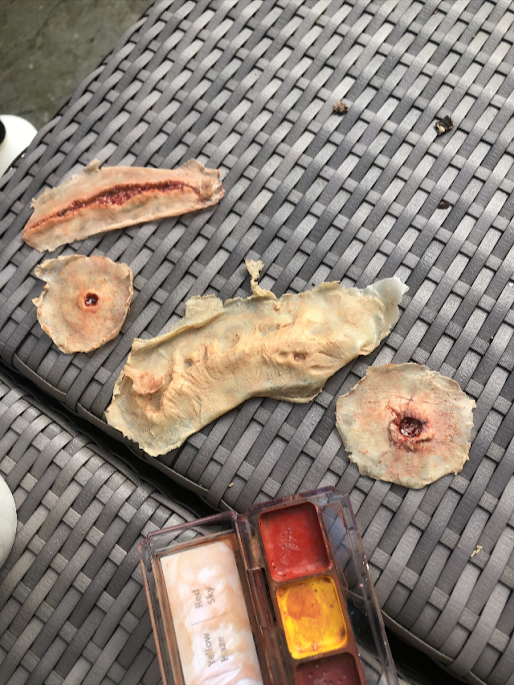
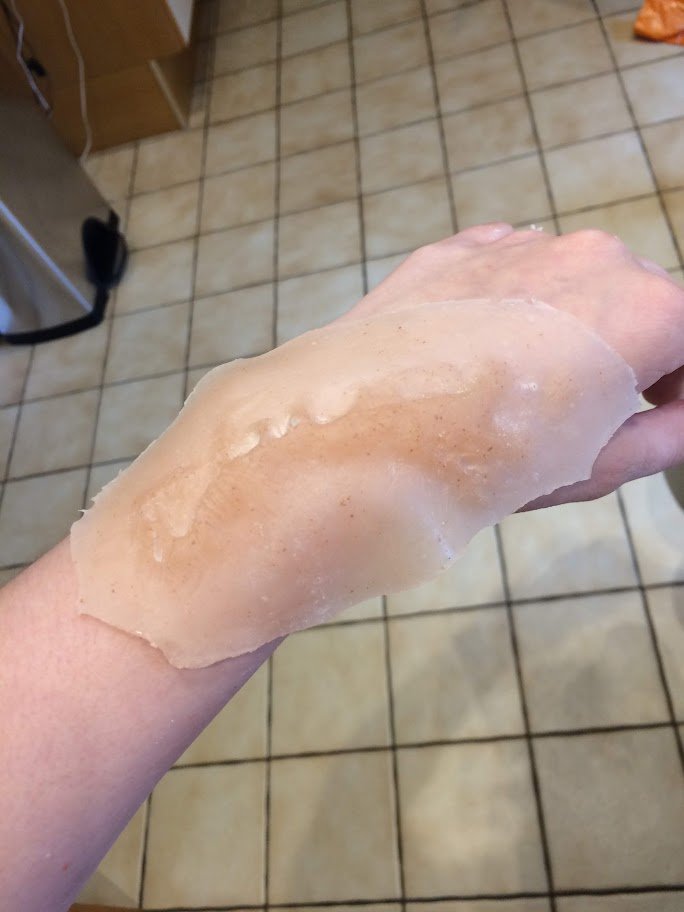
Gelatine cast prosthetics made using food-grade clear gelatine, cinnamon, and food colouring.
An essay detailing the development of the industry, including the prosthetic masks of WW1, a comprehensive list of materials, and detailed explanation of techniques can be shared via email.
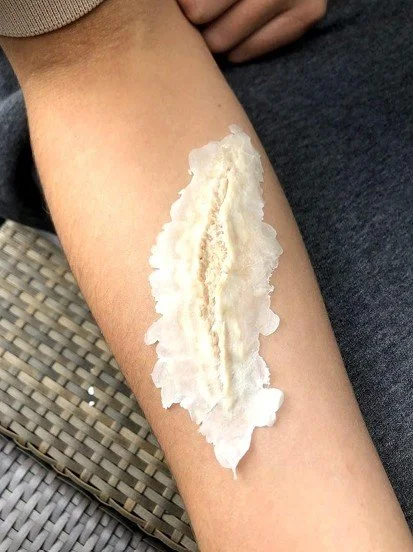
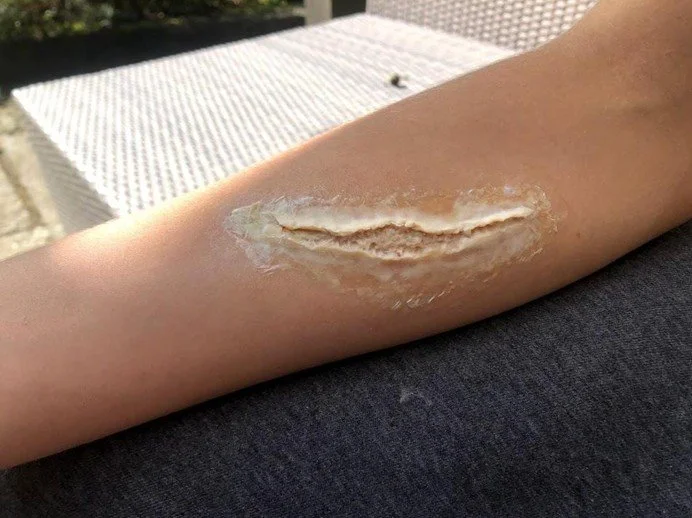
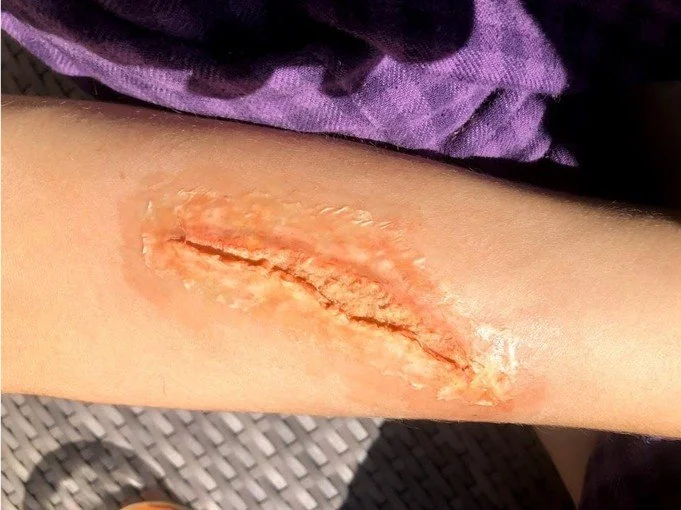
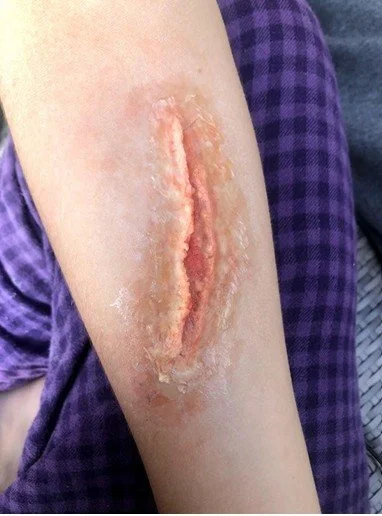
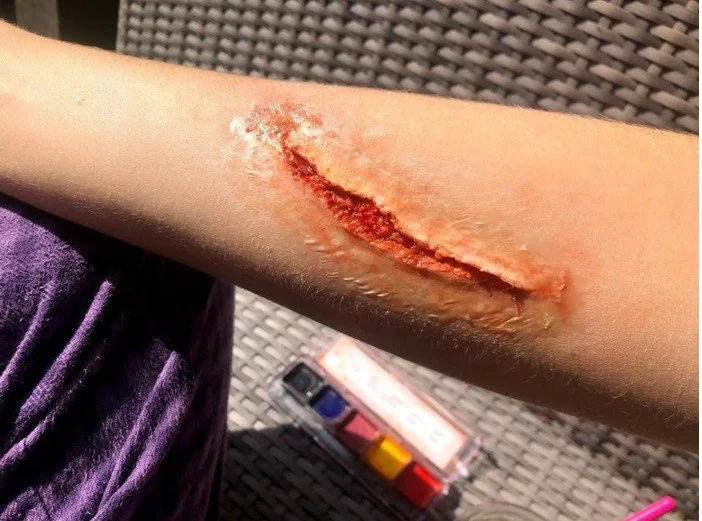
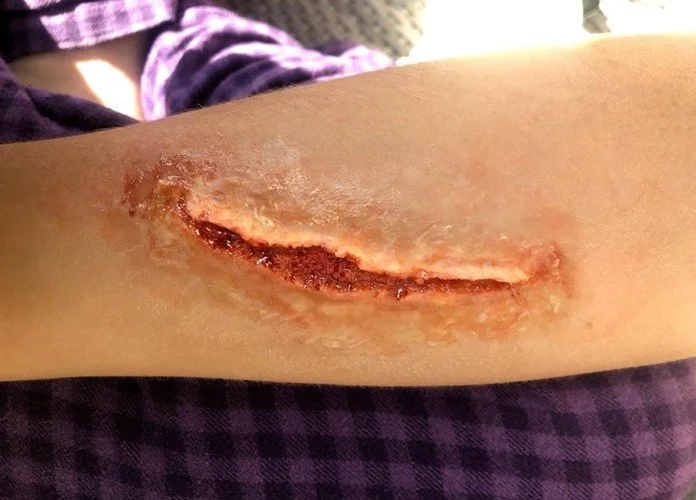
See below for my initial directly applied scar wax prosthetics. Compare the level of detail to the close up shots above.
Casting prosthetics allows for greater level of detail, more realistic texture, more developed colour, and more opportunity to implement my anatomical research into the finished piece.
Scar wax (direct application)

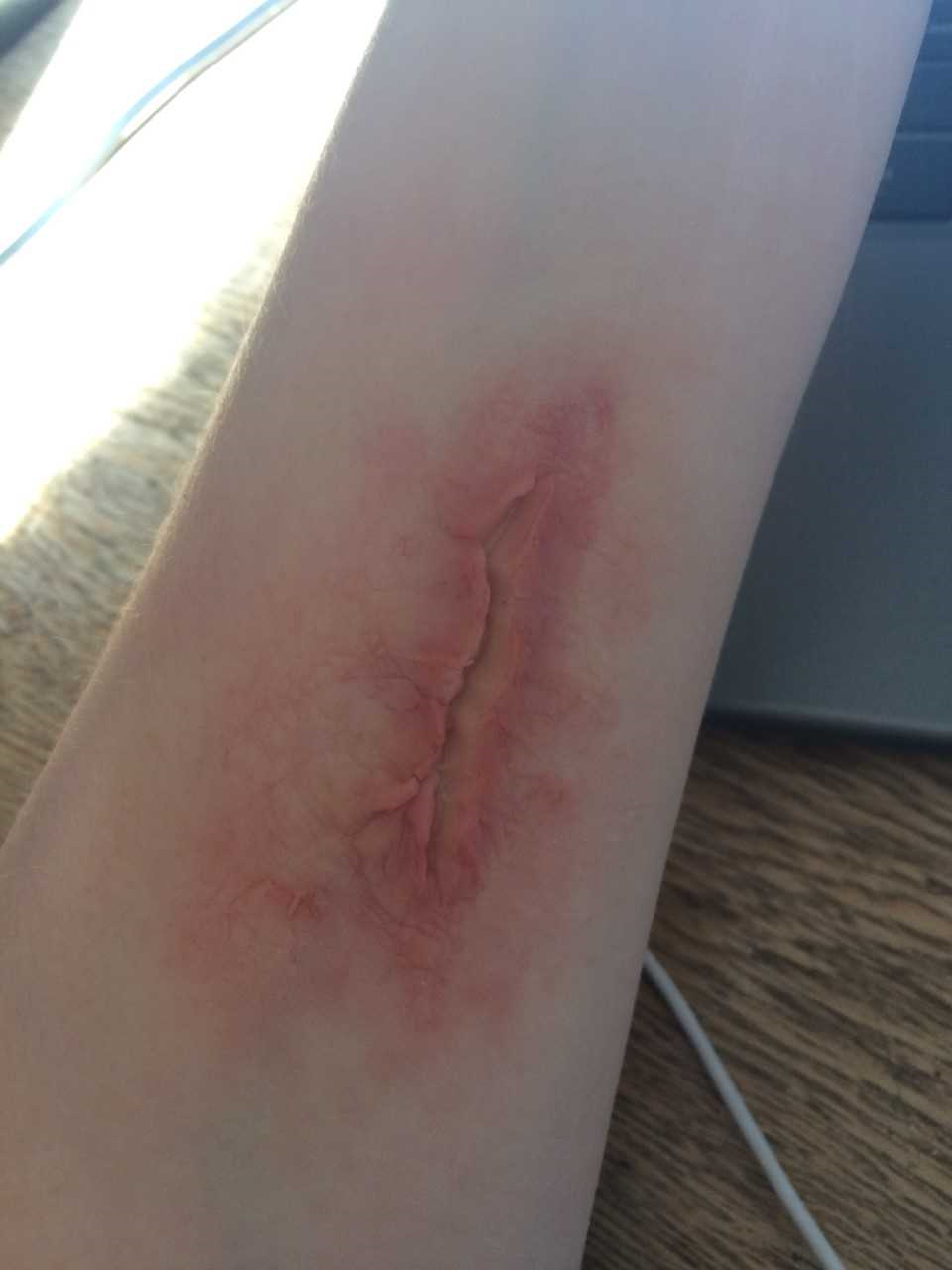
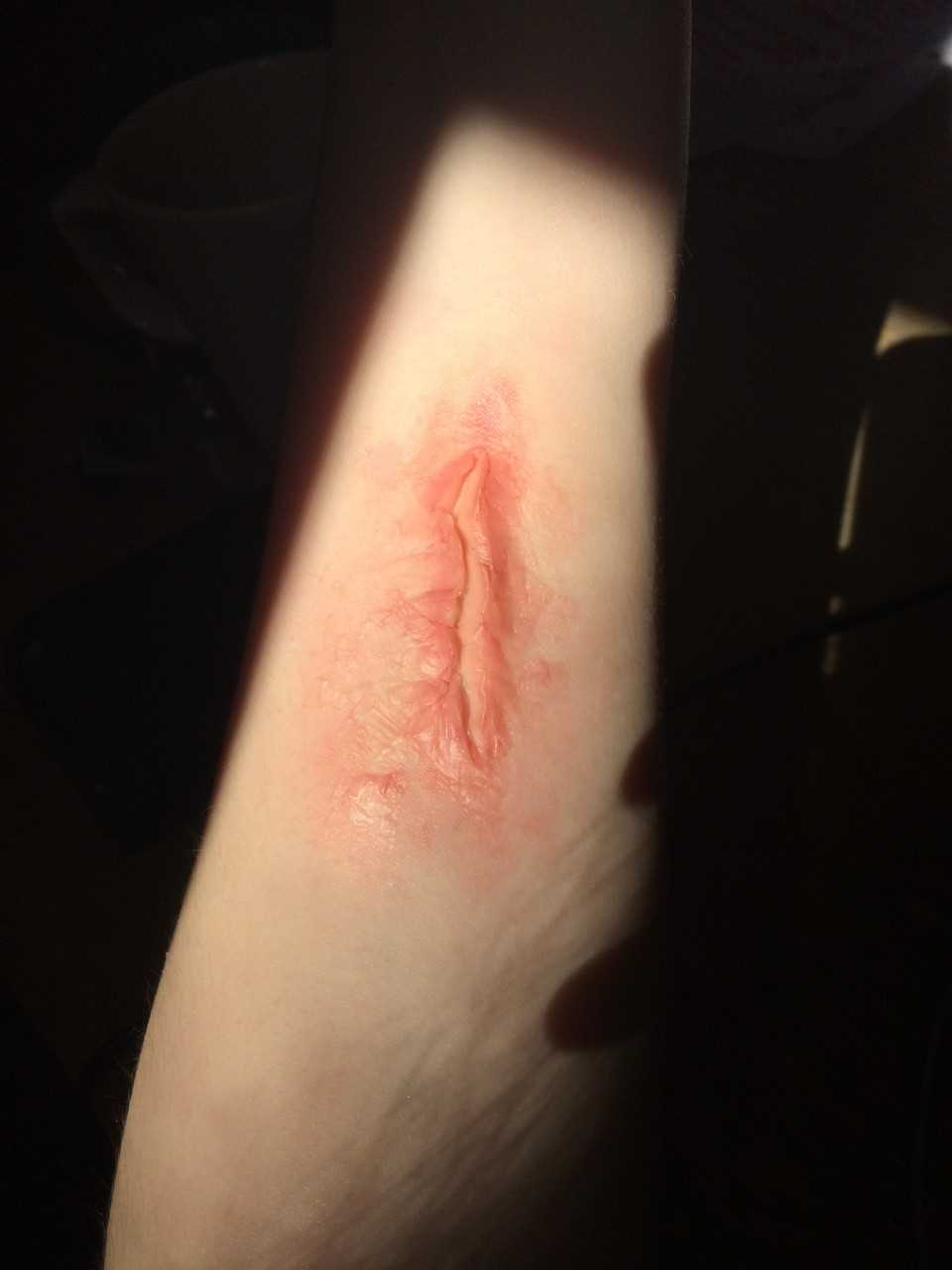
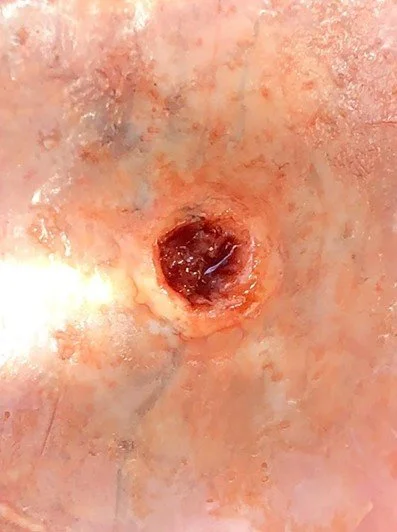
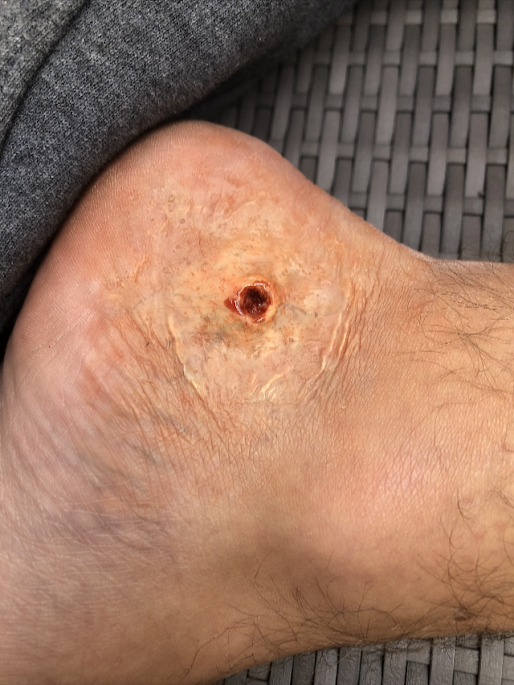
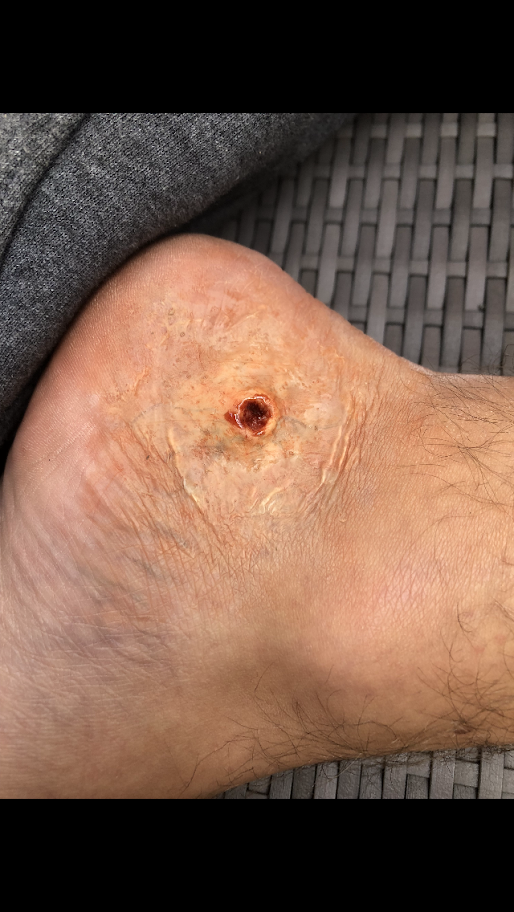
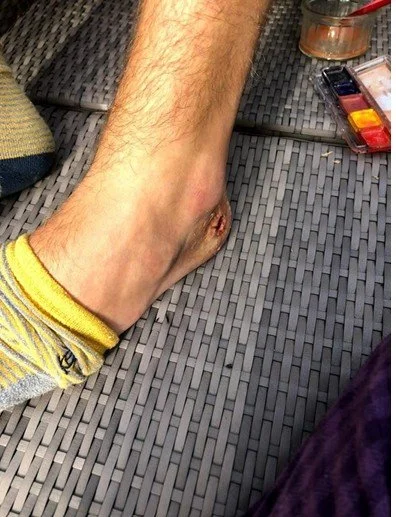
Bullet wound:
Entrance and exit
Same casting process, same mould.
Things to consider:
Painting veins, texturing skin with pores, raised edges due to irritation, size difference between entrance and exit wound.
Process of trial and error. Very effective results when applying adhesive to centre of prosthetic, sticking to flat area, then dealing with edges.
Exit wound less successful due to placement on achilleas. On reflection would chose a flatter area next time for greater realism.
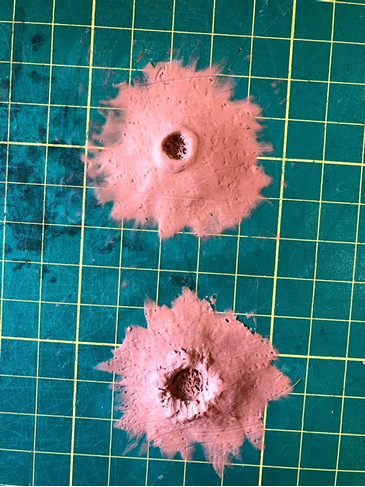
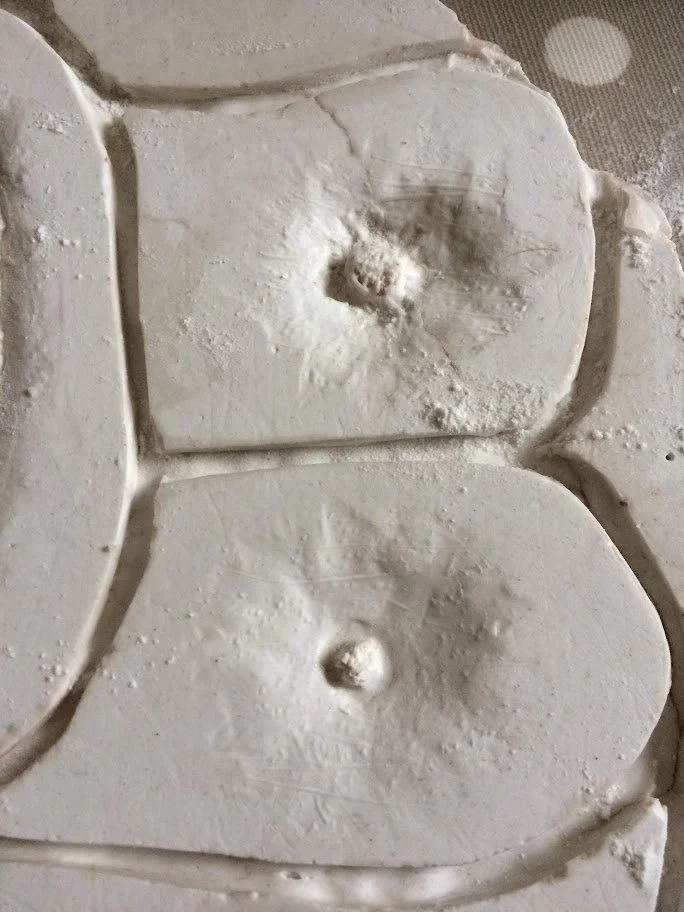
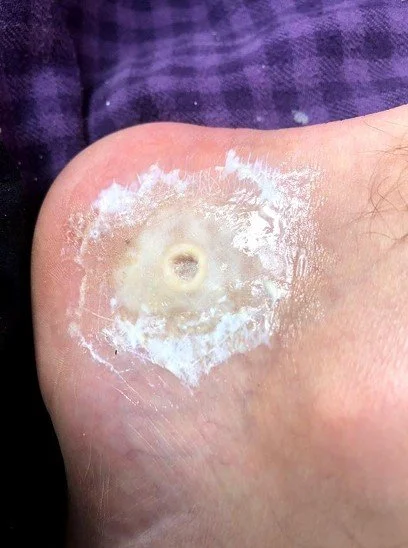
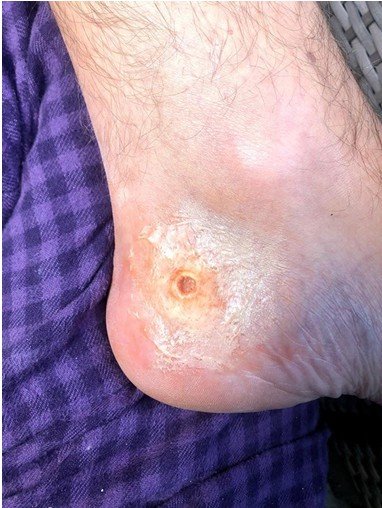
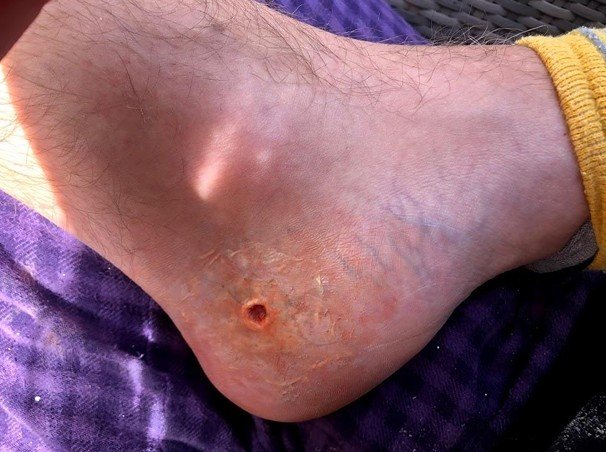
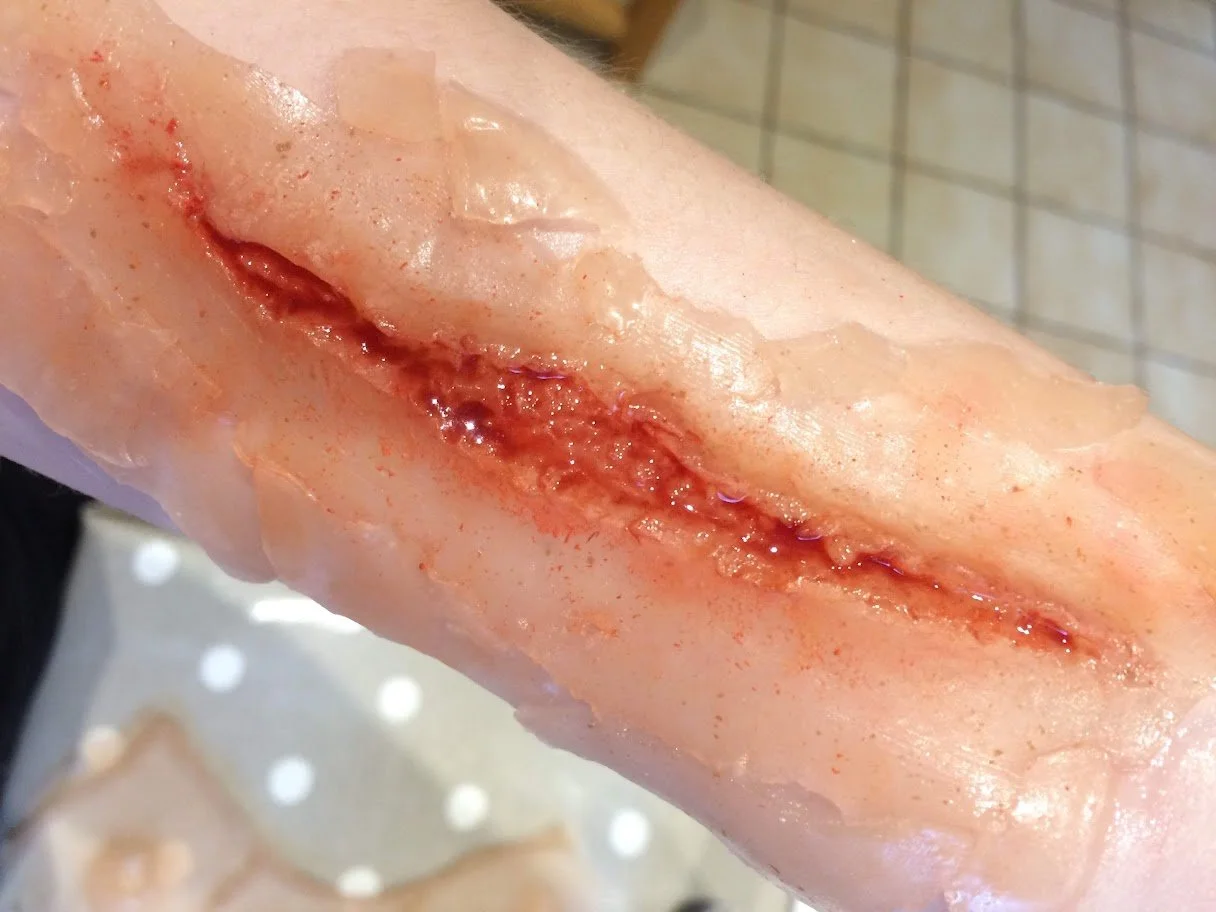
Casting with food-grade gelatine
Kitchen table prosthetics…
Successful colour-match and flecked freckle-like details.
Gelatine prosthetics were thicker, hard to dissolve with acetone to blend the edges.
The prosthetics were very realistic, but became unrealistic when applied due to thickness.
Matted and blurred texture and consistency of the gelatine is more similar to skin than smooth shine of liquid latex.
Easier to colour in realistic manner.
Scars
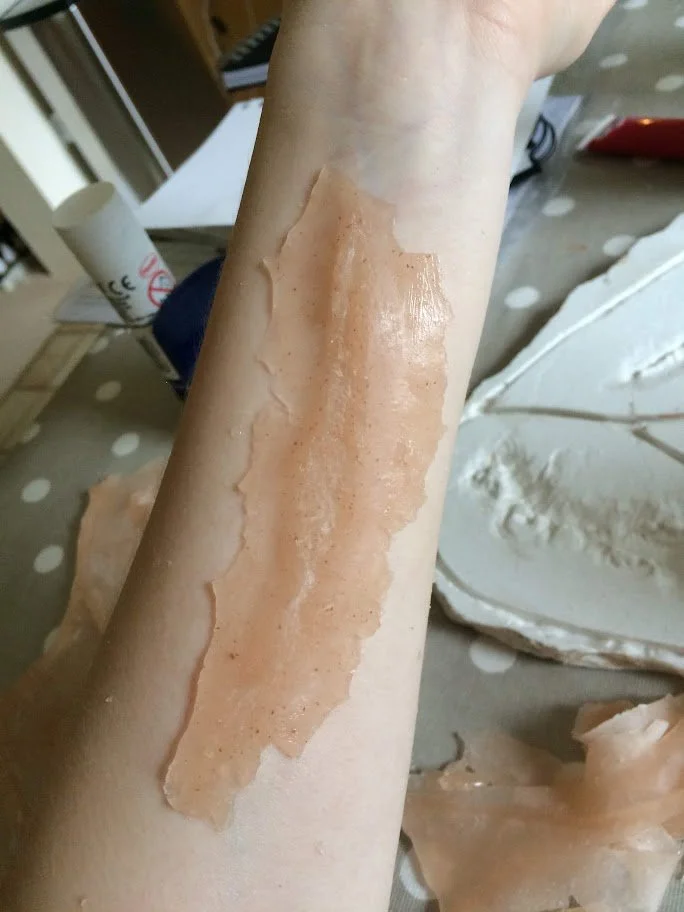
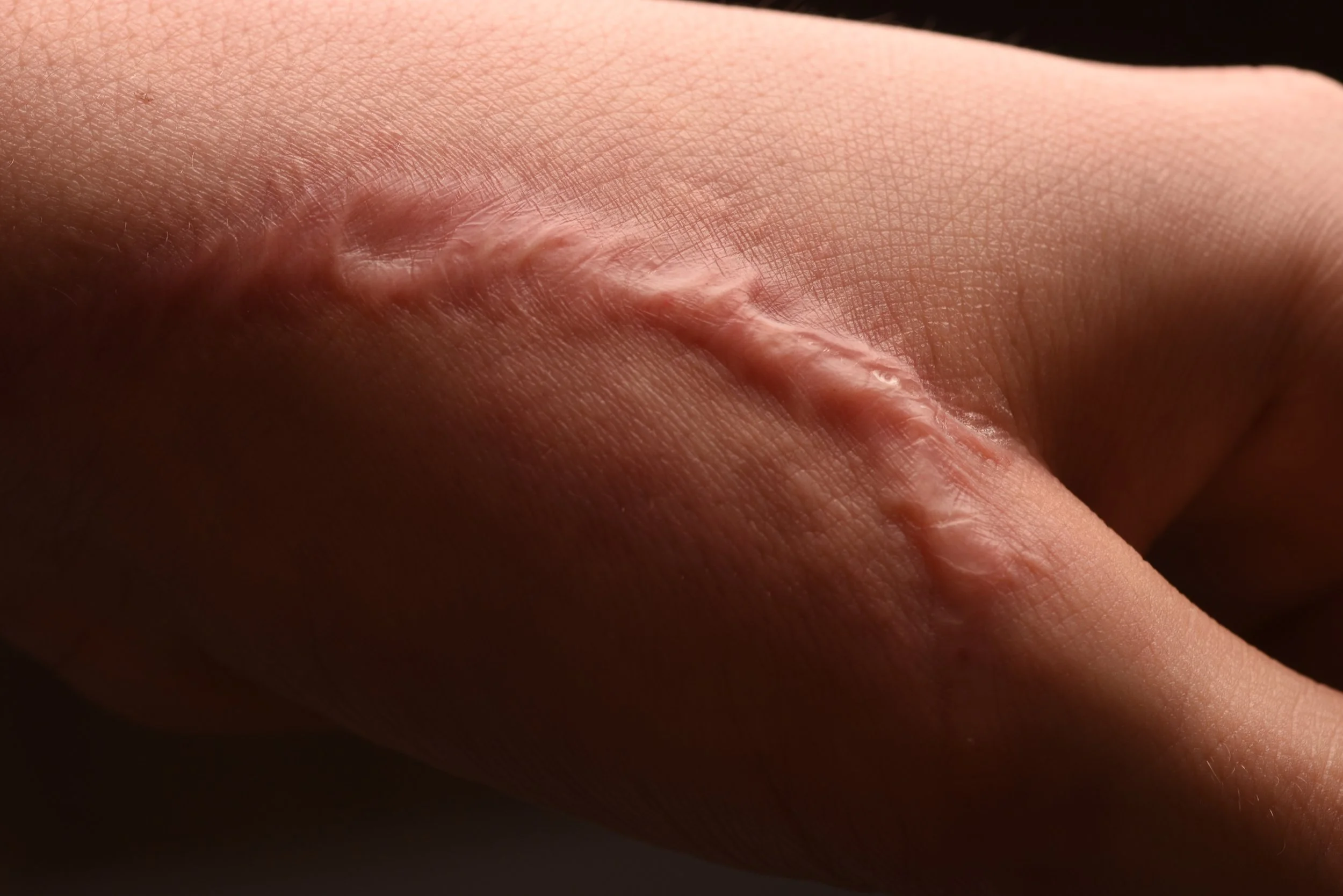
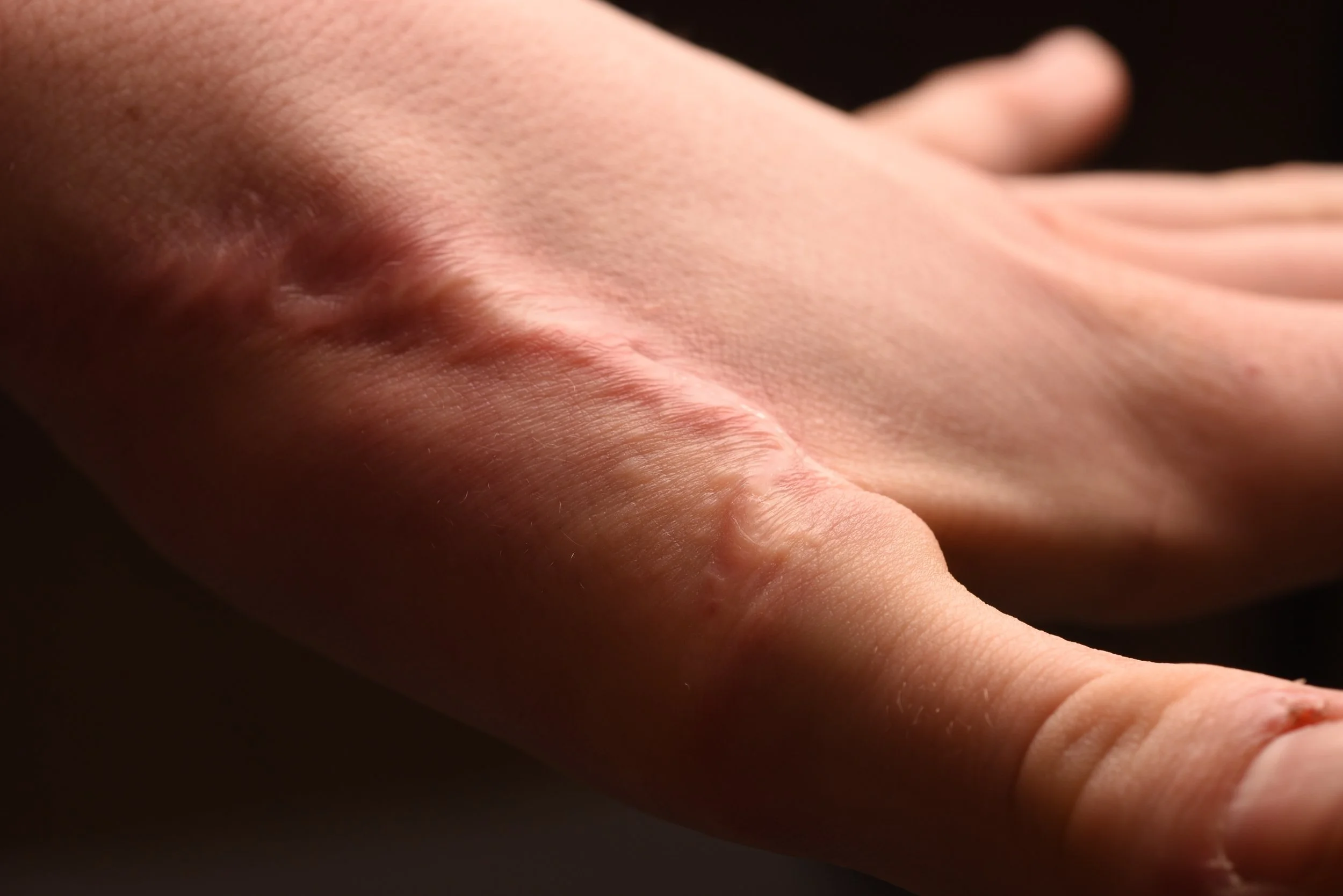
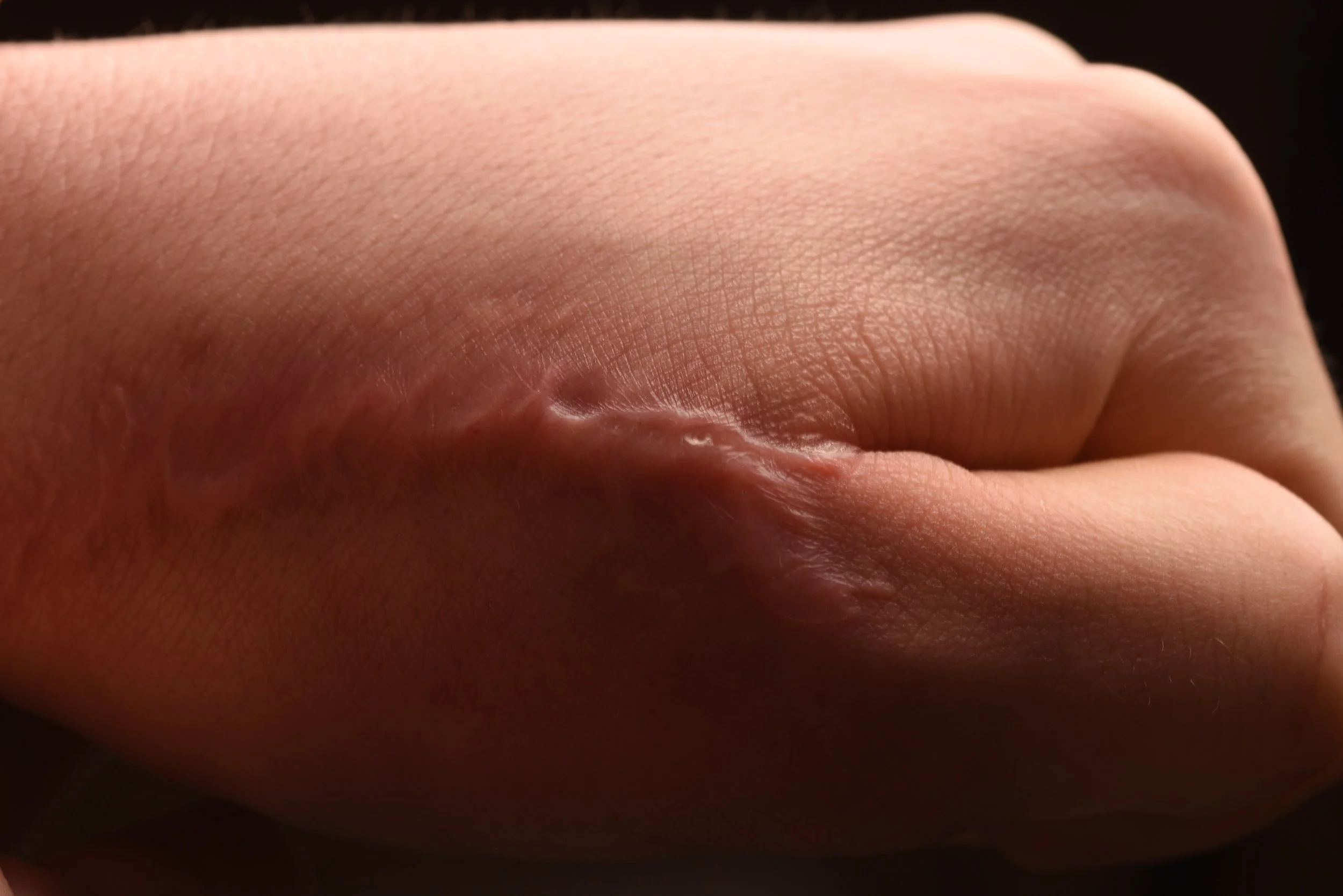
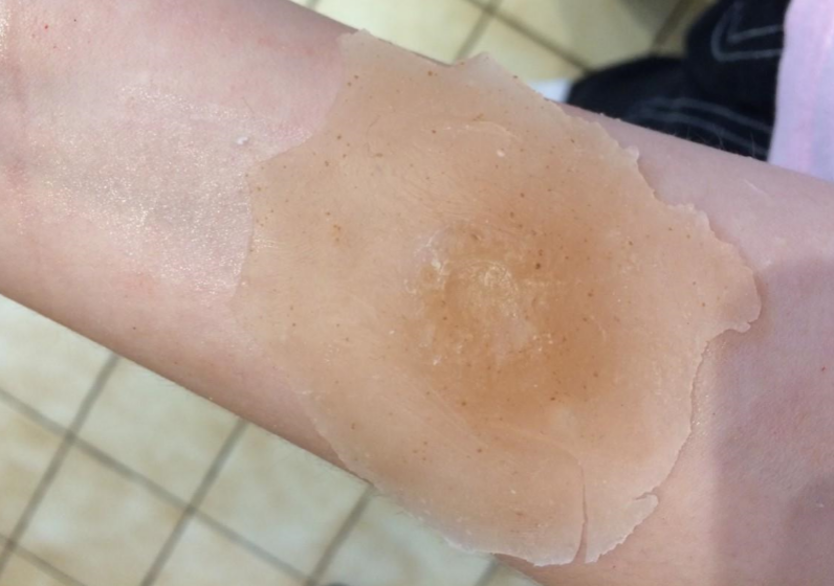
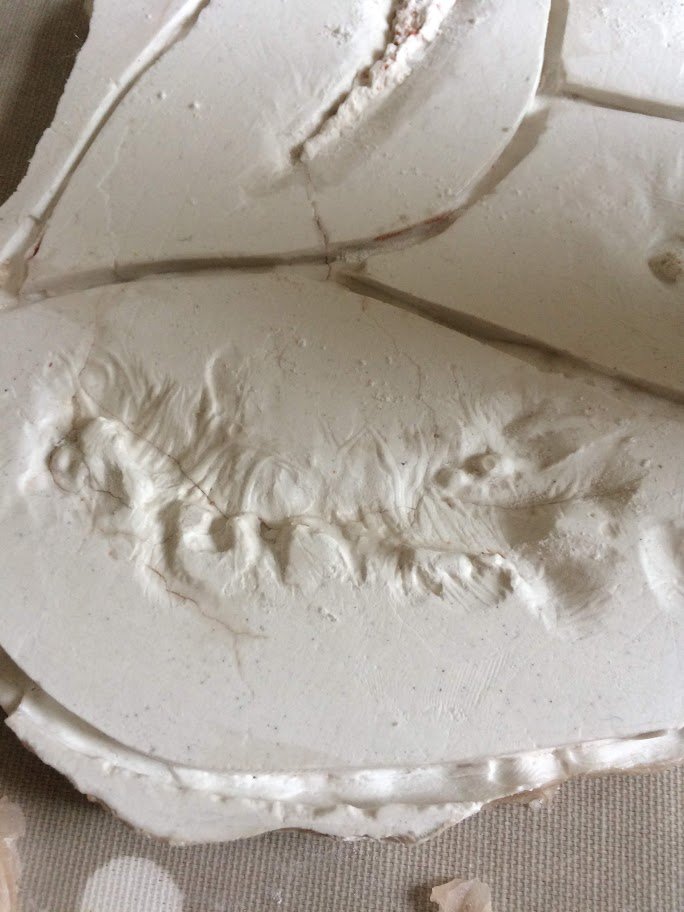
Unsuccessful in practise due to thickness of the prosthetic and issues with scaling.
HOWEVER! Mould itself is beautiful and detailed, colour match is perfect, and I love the progression from initial photoshoot, through to the development process.
Directly applied prosthetics
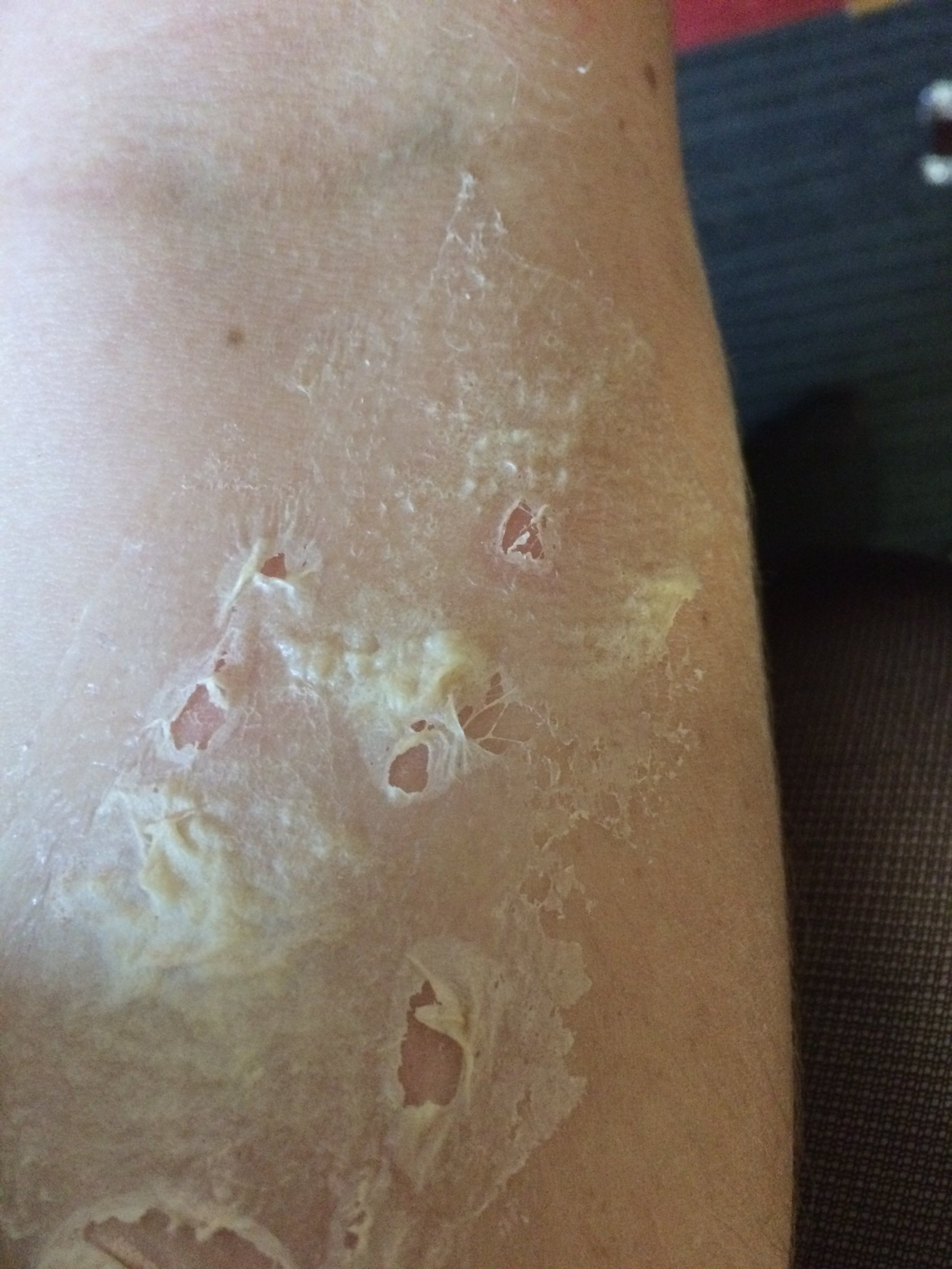
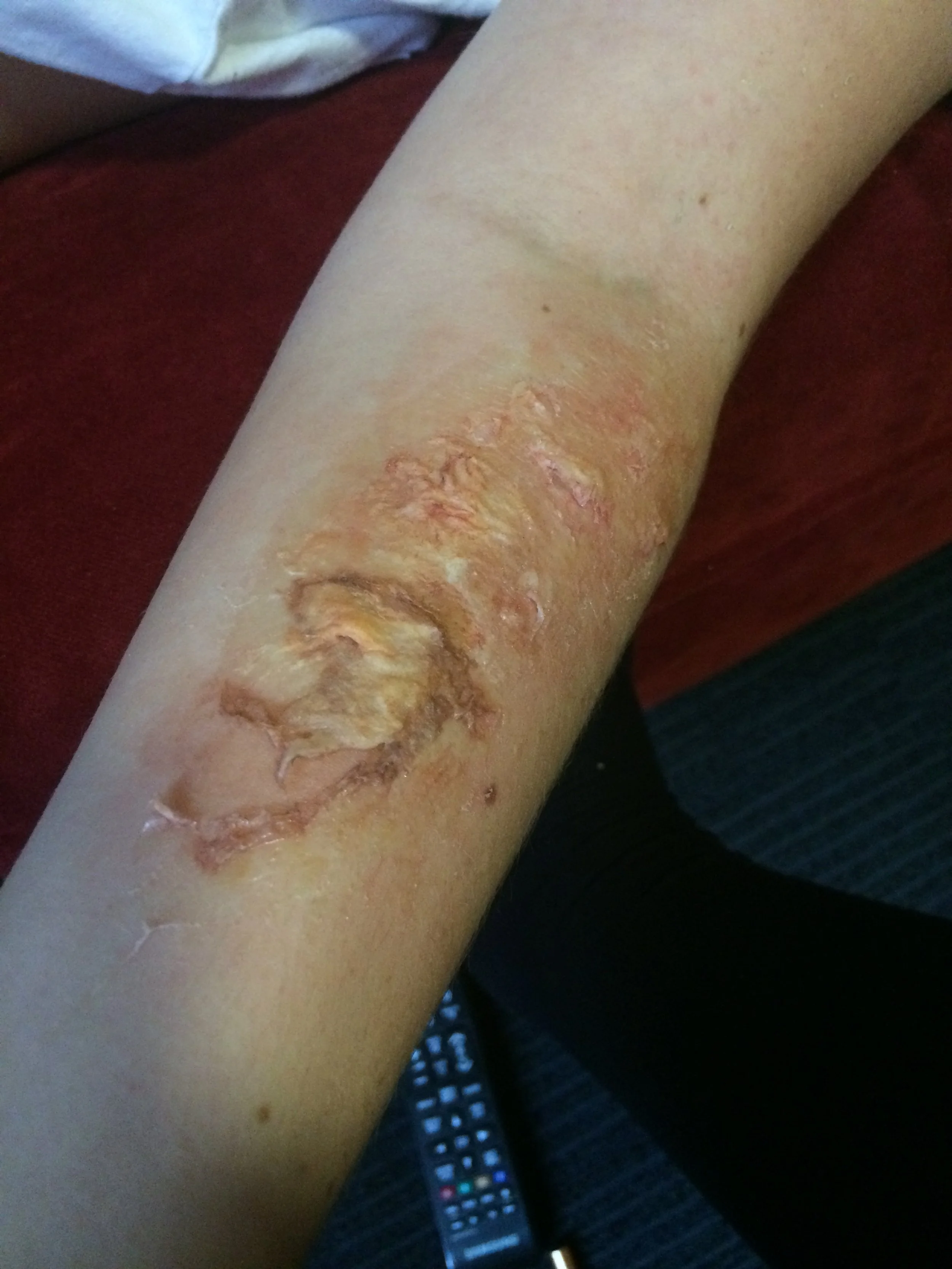
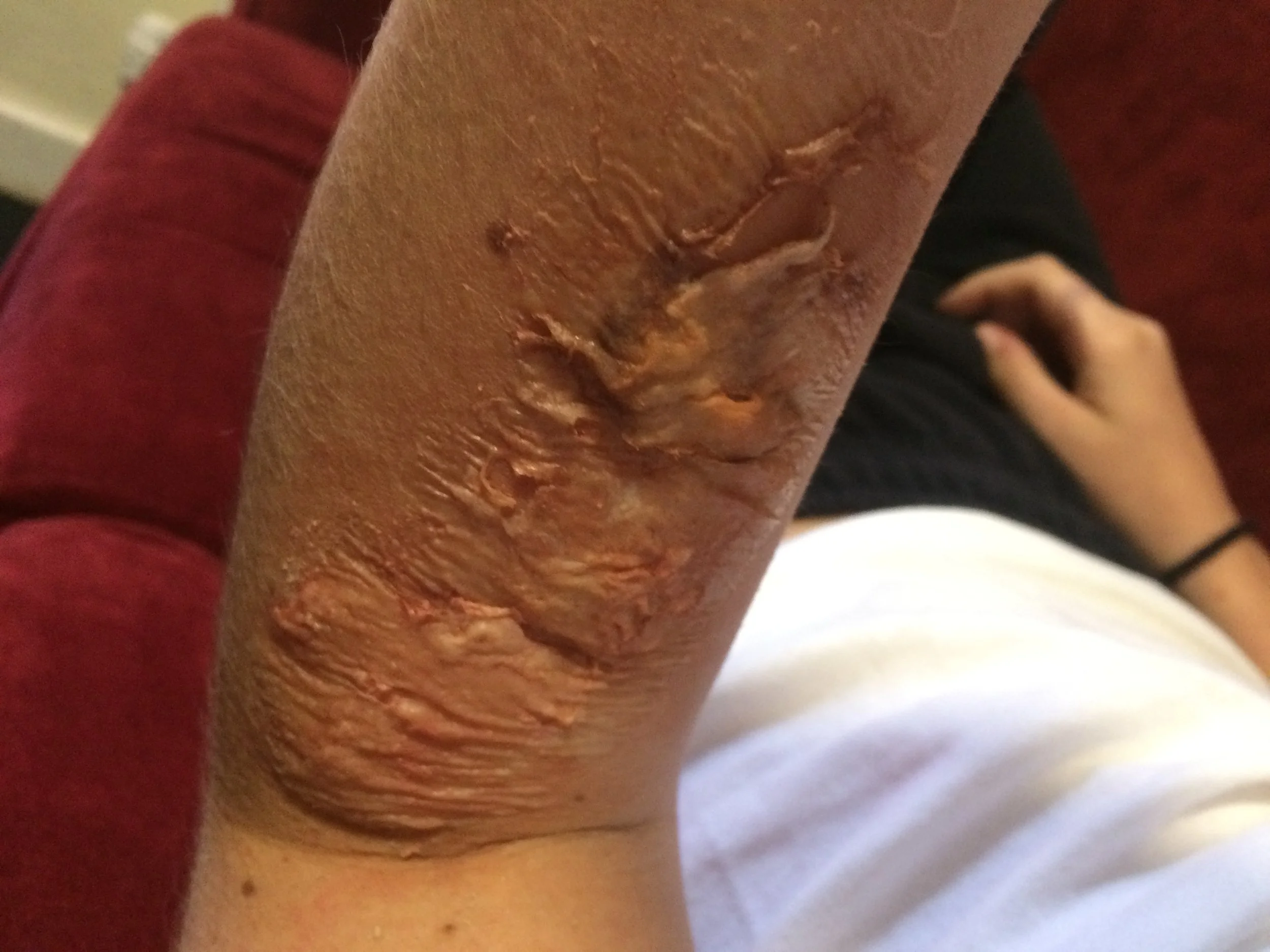
Liquid latex and cotton wool burn.
Reference pics not included but used to develop the look.
From the early stages of experimentation.
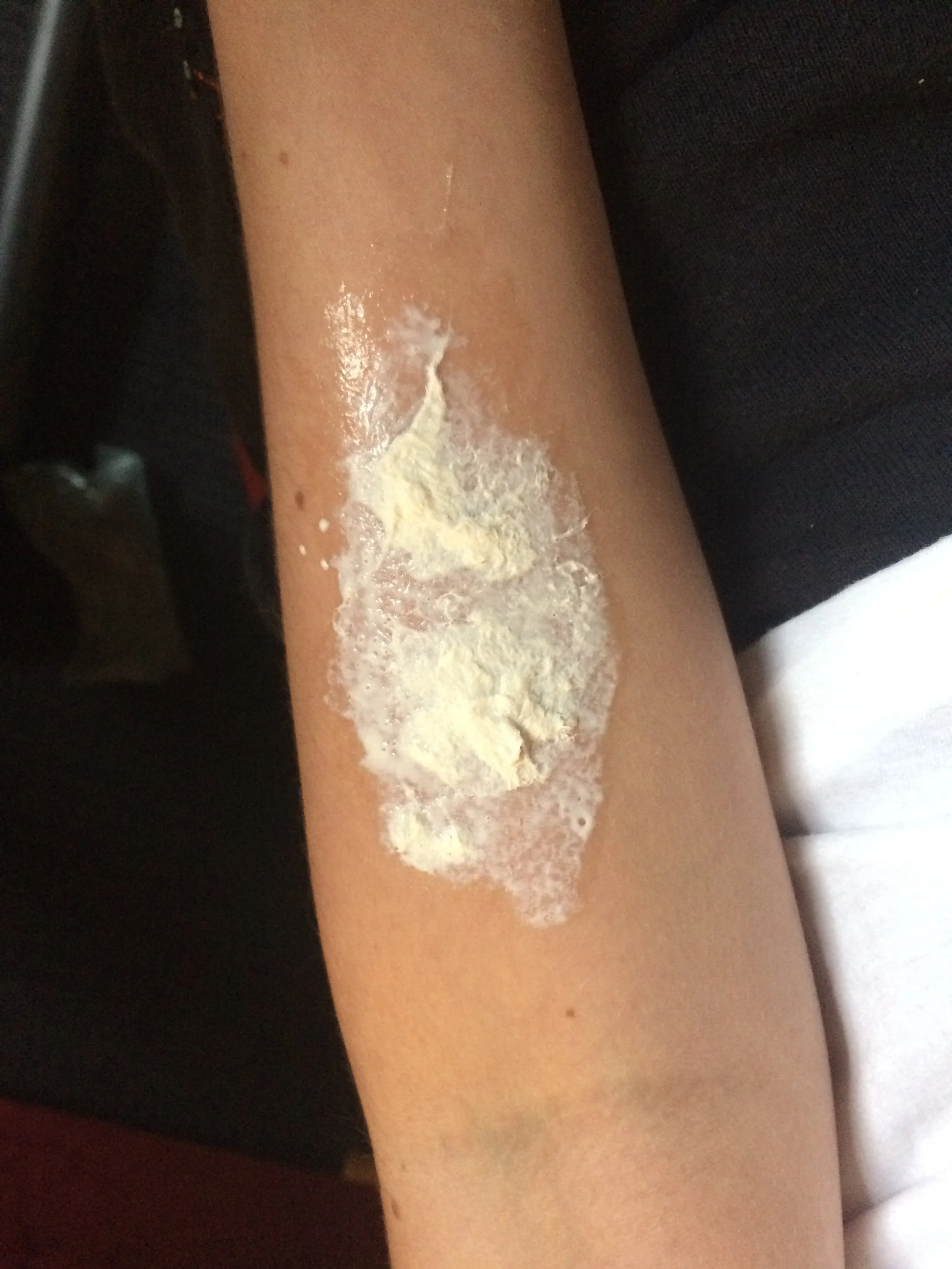
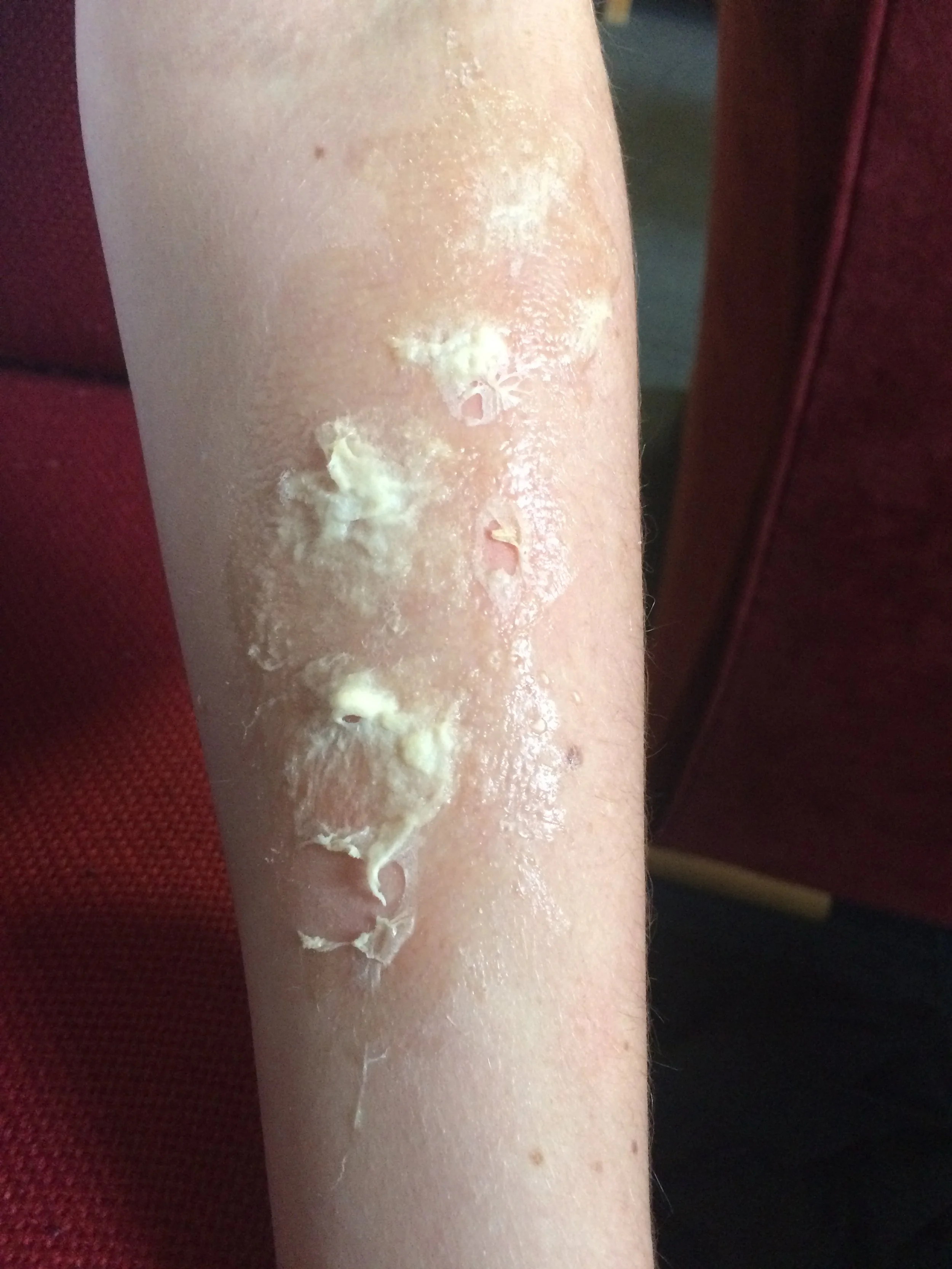

Stimulus….
Interest in prosthetics developed from my exploration of the undulations and movement of the human form, skin texture, and tattooing.